On 8-9 June 2026, FI Group by EPSA participated in the European Association of Innovation Consultants (EAIC) Annual General Meeting in Zagreb, Croatia.
EAIC is a European association representing innovation consultancy firms and supporting dialogue between consultants, institutions and industry on research, development and innovation funding policy.
The event brought together key stakeholders from EU institutions, industry and consultancy to discuss the future of innovation funding in Europe, with a particular focus on the next European long-term budget for research and innovation, the Multiannual Financial Framework (MFF) 2028-2034.
These discussions are highly relevant for organisations seeking to anticipate how European innovation funding will evolve in the coming years.
FI Group by EPSA’s participation in the EAIC AGM reinforces its position as an active contributor to the development of European innovation policy and funding frameworks.
By being present where key decisions are discussed and shaped, FI Group by EPSA gains early visibility of policy and programme developments while contributing to the design of future funding mechanisms. This enables the company to create tangible value for clients by:
This involvement supports FI Group by EPSA’s ability to provide clients with forward-looking insight, stronger strategic guidance and a clearer understanding of future EU funding programme opportunities.
During the EAIC AGM, Luca Pira, Public Affairs and International Grant Manager and Coordinator of the National Funding Schemes Working Group, played a central role in both implementation and strategic discussions as part of the Working Group Coordinators panel.
In this context, he presented FI Group by EPSA’s contributions to key topics, including the future design of EU innovation funding at national and regional level under the MFF 2028-2034, as well as regulatory and State aid frameworks.
This included input into the recent public consultation on the General Block Exemption Regulation, where FI Group by EPSA contributed as part of a coordinated effort at both national and European level alongside key industry associations: the European Association of Innovation Consultants (EAIC), the Asociación Española para el Fomento de la Financiación de la I+D+i (AFIDI), the Associazione Italiana per la Ricerca Industriale (AIRI), and BusinessEurope.
Luca also highlighted upcoming work on a European comparative report on R&D and technological innovation incentives, coordinated by Víctor Cruz, Regulatory, Public Affairs & Strategy Director. This further demonstrates FI Group by EPSA’s expertise in tax incentives and regulatory intelligence.
FI Group by EPSA’s active participation in the EAIC AGM also strengthens its international partner network, particularly in countries and regions where the company does not yet have a direct presence, such as Croatia and the broader Balkan region.
These markets are becoming increasingly strategic within the European innovation landscape. Through EAIC, FI Group by EPSA is also able to leverage collective advocacy capacity at European level, enhancing its influence on policy and funding frameworks beyond what a single organisation could achieve independently.
This approach creates stronger opportunities for FI Group by EPSA and its clients in international and cross-border innovation initiatives.
Active engagement across EAIC Working Groups
FI Group by EPSA is actively engaged in several EAIC Working Groups, covering:
This involvement strengthens the company’s expertise, expands its network and enhances its ability to anticipate and shape market trends.
As Europe defines its next innovation funding cycle, FI Group by EPSA will continue to contribute actively within EAIC, remaining at the forefront of policy and programme developments. This includes participation in the EAIC Summit on the Future of Funding in Europe, taking place on 3 November 2026 in Brussels. The event is expected to feature speakers such as MEP Christian Ehler, a key figure in EU research and innovation policy, who plays a leading role in shaping the MFF 2028–2034 and the upcoming FP10.
This engagement is aligned with a broader shift in the sector: from a primarily operational role focused on identifying opportunities and preparing applications, towards a more strategic advisory role. This requires the ability to combine technical, financial and regulatory expertise to position projects, structure partnerships and support clients across the full innovation lifecycle.
By leveraging EAIC’s collective advocacy capacity at European level, FI Group by EPSA strengthens its ability to influence frameworks, anticipate change and create tangible value for clients, while reinforcing its competitive position in the European innovation funding landscape. FI Group by EPSA can support organisations in identifying upcoming opportunities, interpreting regulatory changes and positioning projects for future funding success.
European funds for businesses have become one of the most relevant drivers for supporting business projects linked to innovation, sustainability, digitalisation and industrial development.
The European Union structures a range of programmes that channel resources towards strategic initiatives, including Next Generation EU, ERDF funds, and calls under the Horizon Europe programme, each with complementary objectives and approaches. Understanding how these instruments operate, what opportunities they offer and which criteria determine access is essential for companies to anticipate calls and position their projects with a greater likelihood of success.
To support the planning of European funds for businesses, we provide an European calls, enabling organisations to identify key dates and the most relevant opportunities for each type of company.
European funds for businesses are financial instruments created by the European Union to support projects that promote economic growth, competitiveness and the transition towards a more innovative and sustainable model. Their purpose is to channel resources into initiatives that enable companies to:
These grants are structured through different programmes aligned with specific priorities. Some encourage investment aimed at modernising production processes or adopting advanced technologies, while others finance R&D&I activities, decarbonisation actions, or projects that reinforce territorial cohesion through new industrial capabilities. This diversity of objectives makes it easier for companies of different sizes and sectors to find funding schemes suited to their project needs.
The importance of European funds for businesses lies in their ability to reduce financial barriers and facilitate the launch of initiatives that require significant investment. They also help accelerate transformations that would be more complex to undertake using internal resources alone. In a competitive and constantly evolving environment, they represent a strategic tool to drive business innovation, strengthen sustainability and align investments with EU priorities in energy transition, digitalisation and industrial development.
The funds have enabled European funding for businesses to support projects related to digitalisation, energy transition, industrial innovation and process modernisation, financing strategic initiatives that require substantial investment. Their main contribution has been to provide resources for transformations that enhance competitiveness and support adaptation to EU priorities in areas such as energy efficiency, sustainable mobility and technological development.
However, this instrument is temporary, with a clearly defined timeframe: its implementation period ends in August 2026, placing organisations at a decisive moment. Spain has launched various calls through the Recovery, Transformation and Resilience Plan, including strategic programmes such as the PERTEs, enabling companies across different sectors to access funding for high‑impact projects.
The final phase brings a more demanding environment: increased competition, limited scope to refine proposals, and a clear need to progress with the execution of already approved projects. At this stage, the ability to define solid initiatives aligned with the plan’s priorities is decisive in making the most of the European funds for businesses available before the programme officially closes.
The European Regional Development Fund (ERDF) is one of the key European funds for businesses within the EU’s cohesion policy. Its purpose is to reduce territorial disparities and support economic development through investments that strengthen competitiveness, promote innovation and encourage the transition towards more sustainable production models.
In the 2021–2027 period, ERDF resources are focused on five main priorities:
For companies, ERDF represents a stable source of funding, with active calls in Spain through regional and national programmes. Aid intensity varies by autonomous region, with higher percentages in less developed or transition regions, enabling business projects at different maturity levels to access resources adapted to their territorial context.
Horizon Europe is one of the main European funds for businesses supporting research and innovation projects with a direct impact on business competitiveness. Its financial framework strengthens opportunities over the coming years: The European Commission has allocated €14 billion for the period 2026–2027, securing a significant amount of funding for technological, scientific and industrial development initiatives.
For companies, this programme offers funding aimed at high value‑added projects, including the development of new technologies, advanced digital solutions, and initiatives related to climate and energy, mobility, health, artificial intelligence or deep tech. It also includes specialised instruments such as the European Innovation Council (EIC), which supports startups, scaleups and companies with disruptive projects seeking to increase technological maturity and accelerate market entry.
Horizon Europe requires a higher level of technical preparation, specialised consortia where required by the call, and clear alignment with European missions and priorities. For organisations with a robust innovation strategy, it represents an opportunity to finance ambitious developments, position themselves within strategic value chains and access international collaborations that strengthen long‑term competitiveness.
Other programmes fund R&I projects in specific fields, such as industrial decarbonisation, green and digital transitions, defence capabilities, connectivity infrastructure, culture, or health. These include instruments like the Innovation Fund, the LIFE Programme, the Digital Europe Programme, the European Defence Fund, the Connecting Europe Facility, the Erasmus+ Programme, EU4Health, and InvestEU, among others.
European funds for businesses support initiatives with a clear impact on competitiveness, sustainability and innovation. The most common types of project include:
Accessing European funds for businesses requires sound technical preparation and a clear strategy to ensure that the project complies with the priorities and criteria of each funding scheme. The typical steps include:
FI Group by EPSA works on a daily basis with business projects seeking to access European funding for companies, and this experience reveals a clear pattern: success depends not only on drafting a proposal, but also on correctly interpreting the criteria valued in each call for proposals and structuring projects accordingly.
This requires rigorous technical analysis to define objectives, justify the impact and tailor the scope to what is actually funded. This initial phase is crucial for avoiding deviations, ensuring consistency and increasing the chances of selection, particularly in highly competitive calls for proposals with demanding requirements.
During implementation, documentation management and compliance with milestones also directly affect the continuity of funding. FI Group by EPSA supports companies throughout this process to ensure that implementation remains aligned with approvals and that each action is properly justified — essential in programmes where deviations can affect the final payment.
This integrated approach enables companies to proceed with greater confidence on projects involving innovation, digitalisation or industrial growth, taking advantage of the European funds available to help businesses strengthen their competitiveness and accelerate transformations that would otherwise require greater internal resources or longer timelines.
Research and Development (R&D) tax incentives are among the most widely used policy tools to stimulate corporate investment in research, technological development, and innovation. Alongside grants and public financing programmes, these incentives play a decisive role in helping companies remain competitive in an increasingly globalised economy.
Over the past decades, R&D incentives have evolved from supplementary support mechanisms into essential drivers of technological progress. They enable companies to develop new products, services, and processes while fostering a more continuous and predictable pace of innovation than in previous eras.
According to the Global Innovation Index (GII), global R&D expenditure approached US$3 trillion in 2025, reflecting nearly 3% growth over the previous year and almost triple the real value recorded 25 years ago. The global average R&D-to-GDP ratio has reached 2.0%, compared with 1.48% in 2000, underscoring the growing economic dependence on research.
As innovation ecosystems mature, governments around the world continue to review and update their R&D incentive frameworks. These updates aim to align policies with current technological realities and shift expectations around the type of evidence companies must provide when claiming incentives.
This raises an essential question for businesses:
Many recent reforms reflect a clear intent: to ensure that companies can demonstrate, substantiate, and document the activities and expenditures they report. While some organisations view these expectations as additional administrative burdens, others recognise them as opportunities to improve traceability, data accuracy, compliance, and risk management. More importantly, enhanced documentation can help companies better understand the true impact and value of their R&D efforts.
Although each country’s incentive programme has its own rules, many eligibility criteria share similarities. Common requirements include:
While these obligations may appear administrative, they help build a reliable and consistent innovation ecosystem. They also reduce subjective interpretations and prevent unequal access to incentives.
Between 2024 and 2025, the IRS introduced significant updates to Form 6765 (Credit for Increasing Research Activities), including requirements to:
Describe project objectives and associated technological uncertainties.
In November 2025, Brazil introduced MCTI Ordinance No. 9,563/2025, establishing:
These examples reflect a wider global trend: governments are introducing more robust evaluation standards, especially those aligned with the OECD’s Frascati Manual. Companies unable to adapt risk losing competitiveness and access to key incentives.
Recent court decisions across jurisdictions underscore a consistent message:
Proactive documentation and traceability significantly improve the likelihood of successful R&D claims.
Cases such as:
Demonstrate that structured documentation and evidence of technological uncertainty enable companies to defend claims effectively. Tribunals reiterated that a contract alone does not constitute “subsidised expenditure” or “contracted-out R&D”; a clear link between payment and R&D activity must be demonstrated.
In George v Commissioner, the court denied most R&D claims due to the lack of contemporaneous records. Only projects supported by real-time documentation of experimentation were deemed eligible.
In 2026, the Corte di Giustizia Tributaria del Lazio affirmed eligibility (Sentence No. 435/2026) where the company demonstrated:
The court emphasised that eligibility depends on the solidity of technical evidence—not generic business descriptions.
Across all jurisdictions, the conclusion is clear: stronger documentation leads to stronger eligibility.
Regulatory changes are not merely compliance hurdles. Companies that adopt strong governance and documentation practices gain:
Enhanced documentation provides companies with unprecedented visibility over their innovation activities. The benefits include:
A Canadian manufacturer investing $22M per year in R&D implemented real-time, compliance-aligned project tracking. Within one year:
Outcome: Compliance improvements became catalysts for better decision-making, increased productivity, and stronger innovation performance.
New eligibility and evaluation criteria for R&D tax incentives do not represent additional bureaucracy but a shift towards more reliable, transparent, and evidence-based innovation practices. Companies that embrace these changes position themselves to:
Speak with our specialists at FI Group by EPSA to safely and strategically leverage R&D tax incentives and maximise the value of your innovation activities.
The European Association of Innovation Consultants (EAIC) released a position paper on the Future of the EU Multiannual Financial Framework 2028–2034. The next EU’s long-term spending plan will introduce a restructured funding architecture including the next Research and Innovation Framework Programme (FP10), the European Competitiveness Fund (ECF) and the National and Regional Partnership Plans (NRPPs).
FI Group plays an active role within the EAIC through its representation on the EAIC Board and its coordination of thematic work. In particular, Victor Cruz, Public Affairs, Regulatory and Strategy Director at Fi-Group, serves as a member of the EAIC Board, while Luca Pira coordinates the Working Group on national funding schemes, which contributed directly to the drafting of the position paper.
The association supports the overall ambition to strengthen Europe’s competitiveness, strategic autonomy and territorial cohesion through a more integrated approach to research, innovation and deployment.
It highlights the intention to create a more integrated policy framework linking research, innovation, industrial deployment and regional development, while underlining that the effectiveness of this approach will depend on clear governance, predictable programming and sufficient budgetary resources.
Regarding FP10, EAIC notes the proposed financial envelope of €175 billion in current prices and reiterates its view that this level should be regarded as a minimum. The Association recalls its recommendation for a budget of at least €200 billion (2025 prices), with collaborative research under Pillar II remaining the central component of the programme. The paper also draws attention to implementation aspects, including programme predictability, evaluation procedures, the use of lump‑sum funding and the operational clarity of research security provisions.
In its assessment of the European Competitiveness Fund, EAIC recognises the rationale for a dedicated instrument supporting strategic technologies and industrial deployment. At the same time, the position paper identifies a need for clearer definitions of award criteria, funding modalities and co‑financing requirements, as well as transparent governance arrangements. Particular emphasis is placed on maintaining accessibility for SMEs and ensuring a clear interface between FP10 and the ECF.
The position paper also addresses the proposed National and Regional Partnership Plans, expressing concerns about the limited role currently envisaged for regional authorities. EAIC stresses the importance of multi‑level governance, distinct financial envelopes and
stronger territorial indicators to preserve the place‑based character of cohesion‑related investments.
The EAIC position paper reflects the collective practical experience of its members in the preparation and implementation of EU‑funded research and innovation projects across Member States. Within this context, FI Group is closely monitoring developments and preparing to support clients.
Get in touch to learn more about how these changes may affect your funding strategy.
Funding innovation in 2026 is no longer a “local” exercise. For global businesses, the fastest route to better cashflow, reduced risk and accelerated scale is a joined-up strategy that blends grants, tax incentives and country-by-country delivery, without losing control of compliance.
At FI Group by EPSA, we see the same pattern across sectors: where R&D is genuinely global, the funding approach must be global too.
Innovation funding is expanding in both complexity and scrutiny. Tax authorities want better evidence, funders want clearer impact, and many schemes now include location rules, collaboration requirements and stricter reporting.
In the UK alone, the latest published HMRC statistics show £7.6bn of support claimed under R&D tax credits in 2023 to 2024. That scale explains why governance, documentation and “right first time” submission have become non-negotiable.
Meanwhile, businesses are increasingly expected to “stack” support intelligently, not just chase the biggest headline scheme.
“The finance edge comes from stacking non-dilutive funding from local and international schemes, making innovation risk manageable and more profitable.”
Fawzi Abou-Chahine, Funding Director, FI Group by EPSA UK
That is the mindset behind a global innovation funding operating model.
A global innovation funding strategy is a coordinated plan that matches your R&D roadmap to the best available support in each territory, then governs delivery so claims and applications work together rather than collide.
Two core building blocks:
The strategic aim is to combine both, where permitted, while managing interactions such as state aid, “double funding” restrictions and differing definitions of eligible costs.
FI Group’s approach is deliberately practical: align the funding plan to how the business actually runs, then execute locally with global coordination. Our teams support companies to identify and secure optimal financing conditions for R&D and innovation, from local tax incentives to national and international grants and loans.
1) Map the R&D footprint and funding “right to claim”
We start with a clear view of:
This matters because many regimes apply overseas restrictions or location tests. For example, the UK’s merged scheme notes restrictions on some overseas expenditure.
2) Define the “global project narrative”, then localise it
Your technical story must be consistent globally, but written to local tests.
A strong model is:
This becomes vital where administrations require extra disclosure. In the UK, HMRC introduced an Additional Information Form requirement for claims from 8 August 2023.
3) Build the funding stack by work package
We split the R&D plan into work packages, then assign the right funding pathway:
This is where funding innovation in 2026 becomes a portfolio discipline, not a one-off application.
4) Execute locally, govern globally
Local execution protects eligibility. Global governance protects consistency.
In practice this means:
This “local delivery, global control” model is central to successful cross-border R&D funding.
Snapshot: grants and R&D tax incentives across key jurisdictions
Below is a practical snapshot of major grant pools and headline R&D tax incentive rates, using the latest publicly available figures as at January 2026. Funding volumes and effective benefit vary by company profile, sector and project design.
Grant landscape, recent indicators
R&D tax incentive headline (2026 rules)
Grant landscape, latest published programme data
R&D tax incentive headline (2026 update)
Grant landscape
Grant landscape
R&D tax incentive headline
Grant and public R&D investment landscape
R&D tax incentive headline
Grant landscape
R&D tax incentive headline
Brazil offers both grant-style support (varying by call and agency) and tax incentives. One widely used incentive is Lei do Bem, which provides an additional deduction of 60% to 100% on eligible R&D spend, equating to a tax reduction of 20.4% to 34%. Activities must be carried out in Brazil.
Scenario (illustrative): A global industrial software company has:
A structured funding plan could look like this:
Define work packages that match each jurisdiction’s strengths
Align each work package to the right support
Create one evidence pack, three compliant outputs
Add a “global bet”
Where the innovation is truly collaborative and scalable, consider an EU route (EIC Accelerator or Horizon Europe consortia), especially where the Spanish entity can lead EU engagement.
The strategy improves cash runway, reduces reliance on a single funding source and increases certainty of delivery, because funding is attached to defined work packages rather than vague “innovation spending”.
Common CFO challenges in 2026 and how to mitigate them
FI Group by EPSA operates internationally with a dedicated incentives and grants capability, supporting businesses to access funding across geographies and industries. Our international team includes over 1,400 experts across 13 countries, supporting 15,000 clients worldwide and securing over €1.7bn in funding annually, which is why many multinational groups use FI Group to coordinate multi-country innovation funding strategies with consistent governance and local compliance.
Actionable steps for funding innovation in 2026
1) Can we combine grants and R&D tax relief on the same project?
Often yes, but you must manage interaction rules, particularly whether the grant is considered state aid or restricts claiming on the same cost base.
2) Which countries are best for innovation hubs in 2026?
It depends on your footprint and sector. The UK, Ireland, Spain, Singapore and the US each offer distinct mixes of grants and tax incentives.
3) What is the biggest failure mode in cross-border funding?
Treating each application or claim as a standalone activity, rather than as part of one governed portfolio.
4) How do we avoid double funding issues?
Separate work packages, track funding sources per cost line, and maintain auditable links between technical deliverables and financial records.
5) What should we do first if we have never built a global funding strategy?
Start with a footprint map and a shortlist of projects, then design a two-track plan: quick wins (tax incentives) and strategic bids (grants).
That mindset is changing rapidly. The average global cost of a data breach reached USD 4.88 million in 2024, marking a significant year‑on‑year increase and highlighting the severe financial and reputational consequences of inadequate protection. But the true cost goes far beyond fines and incident response. Recent research shows that 87% of consumers would not do business with a company if they had concerns about its security practices or recent security and privacy incidents. This convergence of escalating risk and eroding trust demands a fundamental rethink.
The question is no longer:
How can we meet minimum compliance requirements?The strategic imperative today is:
How can we transform investment in robust privacy and cutting‑edge cybersecurity into a measurable competitive advantage that drives sustainable business growth?
At FI Group, we see this as the dawn of the Trust Economy. Compliance is the floor; trust is the ceiling. This article explores why a proactive, globally aware approach to privacy and security—one that goes beyond compliance—is the single most critical investment for securing your future, enhancing market positioning, and unlocking new revenue streams.
The rise of cyber threats, from ransomware‑as‑a‑service to state‑sponsored espionage, requires a strategic shift. Every amount spent on advanced security and privacy is not a tax on innovation but an investment in resilience and market leadership.
In a hyper‑connected world, business continuity depends on cyber resilience. The ROI of cybersecurity is best measured by revenue protected, intellectual property secured, and operational efficiency gained.
Time is the most expensive variable in a cyber incident. The global average lifecycle for a data breach is 277 days. Longer lifecycles mean higher costs. Conversely, rapid and sophisticated incident response translates into significant savings.
Companies leveraging AI and automation in Security Operations Centres (SOCs) save an average of USD 2 million compared to those without. This is not just a technology purchase; it involves developing and integrating automated detection and response algorithms—activities that often qualify for R&D tax credits globally.
More than 60% of cyberattacks originate via supply chains or third‑party vendors, making supply chain resilience a critical responsibility.
Certifiable cybersecurity is becoming the new standard for B2B engagement.
The fragmentation of data protection laws, from GDPR to emerging US state and APAC regulations, demands a globally consistent “Gold Standard” in privacy governance.
Consumer trust is fragile. Around 34% of consumers globally will abandon a brand if their data is misused, making privacy a direct revenue driver.
Privacy regulation is not a constraint; it is a catalyst for innovation. Privacy by Design principles encourage solutions that extract analytical value while minimising exposure.
Developing and integrating these solutions often qualifies as technological R&D, making them eligible for global innovation incentives.
At FI Group, we help multinationals adopt a Beyond Compliance posture while minimising net costs through R&D tax credits, grants, and innovation incentives.
| Project Activity | Technical Challenge | Eligible for R&D Funding? |
|---|---|---|
| Developing ZTA | Creating proprietary policy engines for continuous authentication | Yes |
| Data Anonymisation | Novel algorithms for GDPR‑compliant differential privacy | Yes |
| Next‑Gen Threat Detection | Training ML models for advanced persistent threats | Yes |
| Post‑Quantum Cryptography | Researching new cryptographic protocols | Yes |
| Routine Patching | Applying standard updates | No |
Organisations face a choice: treat privacy and cybersecurity as costly compliance exercises or embrace them as growth drivers and trust builders.
The businesses that dominate the next decade will be the most trusted.
By adopting a Beyond Compliance mindset and funding innovation through R&D incentives, companies secure more than networks—they secure market leadership.
Implementing a global Beyond Compliance strategy requires technical, financial, and regulatory expertise. FI Group offers a unified global service to align security investment with maximum innovation incentives.
This milestone highlights the company’s unwavering commitment to leveraging Artificial Intelligence in a secure, ethical, and responsible way, fully aligned with the highest international governance standards. Achieving the ISO/IEC 42001 certification, the world’s first global standard for Artificial Intelligence Management Systems (AIMS), reinforces our leadership in AI governance and compliance.
ISO/IEC 42001 establishes a comprehensive framework fr managing AI systems throughout their entire lifecycle, from design and development to deployment, monitoring and retirement. It places strong emphasis on risk management, transparency, human oversight, and continuos improvement. FI Group’s certification demonstrates that responsible AI i not treated as an isolate initiative but as an integral part of its global governance, technology and compliance model.
«ISO/IEC 42001 certification reflects our conviction that Artificial Iteligence must be developed and used with integrity, accountability and trust at its core.»
Iñigo Paniagua, Corporate Chief Tech & Digital Officer
As AI becomes increasingly embedded in business operations, governance and trust are essential. ISO/IEC 42001 certification provides independent assurance that FI Group:
This achievement reinforces FI Group’s AI vision: Innovating with Integrity and its corporate commitment to deploying innovation responsibly, transparently and in line with evolving regulatory expectations, including the EU Artificial Intelligence Act and emerging AI assurance frameworks.
The certification follows a rigorous, independent audit assessing the design, implementation and effectiveness of FI Group’s AI Management System. Achieving this milestone required cross-functional collaboration across technology, security, legal, compliance, quality and business teams.
Key elements of FI Group’s AI governance framework include:
Rather than treating certification as a one-off exercise, FI Group has operationalised ISO/IEC 42001 through everyday processes, controls and people.
Albert Martín, AI Governance and Product Owner
For FI Group’s clients, ISO/IEC 42001 certification provides assurance that the internal use of AI supporting client services and operations is governed by a robust, transparent and internationally recognised management framework.
While AI at FI Group is currently used primarily to enhance internal processes, decision-making, efficiency and service quality, the certification ensures that any AI-enabled support functions influencing client outcomes are managed with:
This governance approach reduces operational risk, strengthens service reliability and reinforces client confidence in how FI Group applies advanced technologies behind the scenes. From a market perspective, ISO/IEC 42001 positions FI Group as an organisation that adopts AI with maturity and responsibility, anticipating regulatory expectations and demonstrating leadership in ethical and compliant innovation, even when AI is not a client-facing product.
Responsible AI governance strengthens trust not only in what we deliver to clients,
but in how we operate as an organisation.
ISO/IEC 42001 certification marks an important step, but it’s not the finish line. FI Group remains committed to the continuous improvement of its AI Management System, applying the PDCA (Plan–Do–Check–Act) cycle to evolve alongside technological advances and regulatory developments.
By aligning its AI governance with global standards today, FI Group is strengthening its readiness for tomorrow’s regulatory landscape while continuing to unlock the value of Artificial Intelligence in a responsible and sustainable way.
This certification confirms that innovation and strong governance can and must progress together.
As 2026 approaches, it becomes increasingly clear that this year will not simply mark another chronological milestone in corporate planning. For many organisations, it represents the moment when trends accumulated over the past decade cease to be scattered signals and begin to shape concrete decisions. The future is no longer distant enough to allow strategic postponements, and choices made now, on investment, innovation, location and operational models, will begin to have a direct impact within a few months.
The context in which these decisions will be taken is particularly demanding. The global economy has entered a phase where instability is no longer episodic but structural. According to IMF projections, global growth is expected to reach around 3.1%, signalling economic resilience despite persistent geopolitical tensions and headwinds in international trade. At the same time, we are witnessing unprecedented technological acceleration, climate urgency and growing state intervention in investment direction, trends converging within the same decision-making space.
In 2026, companies will no longer compete solely with other market players but within economic systems shaped by industrial policies, regulatory frameworks and increasingly explicit public agendas.
Strategic neutrality, as understood in the past, is no longer a viable option.
This transformation profoundly alters the nature of corporate strategy. For years, it was possible to separate business decisions from political or regulatory domains. That separation is rapidly disappearing. What is emerging for 2026 is a scenario where strategy, innovation and financing cease to be parallel dimensions and instead form a single axis of competitiveness. Organisations that recognise this interdependence early will be better positioned to turn complexity into advantage.
One of the clearest signs of this new phase is the way the global economy is reorganising. Value chains will remain international but will no longer be governed exclusively by cost and efficiency. In 2026, decisions on where to produce, research or scale will increasingly be influenced by considerations of supply security, industrial resilience and technological autonomy. This trend does not merely reflect recent shocks; it signals a deeper shift in how states and economic blocs perceive their position in a more fragmented world.
As a result, we will see intensified policies for selective reindustrialisation and investment attraction in sectors deemed strategic. Clean energy, advanced digital technologies, semiconductors, smart mobility, healthcare and critical materials will continue to attract significant public effort, with growing emphasis on defence and security.
According to Reuters, demand for semiconductor manufacturing equipment is expected to rise by 9% in 2026, reaching approximately $126 billion, driven by the growing need for AI applications and advanced technologies.
For businesses, this means investment geography will no longer be neutral. The presence, or absence, of incentives and support mechanisms will weigh decisively in the viability analysis of many projects.
The question of “where to invest” will become as strategic as “what to invest in”.
This context helps explain why innovation will assume an even more central role in 2026, not as a buzzword or generic aspiration, but as a practical response to a more demanding environment. Innovation will increasingly be the way to manage rising costs, regulatory pressure and global competition. At the same time, it will become more expensive and complex. Digital transformation, AI adoption, industrial decarbonisation and infrastructure modernisation require significant investments, often with uncertain return horizons.
Here lies a recurring strategic dilemma: the need to invest will be evident, but the associated risk will tend to increase. Capital costs will remain under pressure; investors will become more selective and margins for error will shrink. The challenge will not only be deciding where to innovate but also how to make that innovation financially sustainable over time.
This acceleration of strategic timing will directly affect how decisions are made within organisations. Many companies will realise that their internal decision-making processes are not aligned with the new pace of external context. Projects requiring months of analysis or excessively long approval chains will lose relevance before they are even executed. The challenge will shift from choosing well to choosing in time.
This pressure will be particularly visible in investment management. As the economic environment becomes more competitive, available resources will be allocated with greater selectivity. Instead of single large bets, many organisations will move towards more diversified project portfolios, combining short and medium term initiatives with more exploratory ventures. This logic brings innovation management closer to financial investment principles, where risk distribution becomes an integral part of strategy.
In this context, the ability to reduce risk without compromising ambition will gain strategic value. Grants and Tax Incentives will begin to influence decisions that, at first glance, seem purely internal.
When a project can be partially funded through public support or benefit from tax incentives, the equation changes. Risk no longer falls entirely on the company, creating room to move earlier, test solutions at scale or accelerate the transition from pilots to implementation.
This effect will be particularly relevant in sectors where initial investment is high and returns materialise in the medium term. In 2026, many industrial, technological and energy companies will face decisions requiring long-term vision in a short-term environment. Intelligent integration of incentives does not eliminate the need for rigour but aligns financial horizons with strategic horizons, making viable what would otherwise be postponed.
What for years was treated as a financial optimisation mechanism will now be recognised as a true strategic lever. Instead of appearing at the end of the process, these instruments will influence decisions from project conception. They act as non-dilutive capital, reducing risk exposure and enabling higher technological and industrial ambition. In many cases, they will be the factor that transforms a strategic intention into a concrete investment.
In practice, similar projects may have very different outcomes depending on a company’s ability to structure its financing. In 2026, two organisations with the same technological vision may advance at different speeds simply because one integrated incentives from the outset and the other did not.
Competitive advantage will no longer depend solely on idea quality or technical execution but also on the intelligence with which the project is financed.
Europe will continue to be a particularly relevant laboratory for this dynamic. Programmes such as Horizon Europe, the Innovation Fund and national instruments linked to competitiveness and energy transition will reinforce their focus on impact, scalability and execution capacity. Public funding will be increasingly intolerant of projects disconnected from industrial reality. Conversely, it will reward companies capable of demonstrating strategic vision, solid governance and clear contribution to broader economic priorities.
Artificial Intelligence deserves special attention in this context. In 2026, it will no longer be regarded as an emerging technology but treated as strategic infrastructure.
Gartner estimates global AI spending could exceed $2 trillion in 2026, reinforcing the centrality of this technology in corporate investment decisions.
Its impact will be transversal, affecting internal processes, value chains and decision-making models. However, real gains will not come from simply adopting tools but from integrating AI consistently into strategy and operations. This will require investment in data, skills and internal reorganisation, areas where public incentives will play a growing role, supporting responsible and scalable adoption.
Talent will also become more critical. As 2026 approaches, it is evident that the shortage of qualified profiles will remain one of the main constraints on strategic execution. Companies dependent on digital, scientific or advanced engineering skills will need to invest deliberately in capacity building. Training programmes, reskilling and collaboration with universities and technology centres will gain weight, often supported by public mechanisms designed to strengthen the economy’s skills base.
Sustainability will no longer be treated as a peripheral issue. In 2026, it will be integrated into the economic logic of companies. Energy efficiency, emissions reduction and resource management will influence operational costs, access to financing and competitive positioning. Regulations such as the CBAM (Carbon Border Adjustment Mechanism) and stricter reporting requirements will alter the relative profitability of many investments. At the same time, incentives linked to the green transition will continue to shorten payback periods for projects that would otherwise be difficult to justify. Regulation and financing will act complementarily, creating both pressure and opportunity.
As this new cycle takes hold, the difference between reactive companies and those adopting an anticipatory approach will become more evident. The former adjust strategies when pressure has already materialised. The latter work with scenarios, observe early signals and prepare decisions before urgency sets in. In 2026, this difference will be particularly visible in how companies handle innovation and financing. Reactive organisations tend to discover support opportunities too late, when projects are already defined and adaptation margins are limited.
Truly prepared organisations design their plans with awareness of incentive frameworks, public priorities and funding cycles.
This anticipation is not opportunism, as is often wrongly suggested. It is strategic planning in an environment where the state plays an active role in guiding investment. For companies with an international presence, complexity will be even greater. Different geographies will present distinct incentive regimes, specific sector priorities and varied implementation timelines. Therefore, in 2026, the decision on where to invest will become an integrated strategic decision, considering financial impact, regulatory framework and available public support. Global competitiveness will partly depend on the ability to compare these scenarios intelligently.
In this context, reading the market in isolation will prove insufficient. Strategy must also involve understanding public policies, industrial agendas and funding mechanisms, not to follow trends but to make the most robust decisions. Companies that articulate these plans clearly will be better positioned to grow sustainably in a demanding environment. This is precisely where the role of specialised partners becomes critical. Integrating innovation, strategy and financing require deep knowledge of existing instruments, anticipation capability and experience in structuring robust projects.
FI GROUP operates at this intersection, supporting companies in transforming public policies into concrete strategic decisions. Our role goes beyond helping secure funding; it is increasingly strategic in supporting organisational decision-making, enabling better thinking, informed choices and lower-risk execution.
As this year unfolds, it will become increasingly clear that the difference between leading companies and those falling behind lies in how ambitions are financed and executed. The convergence of strategy, innovation and public incentives will be one of the main determinants of global competitiveness in the new economic cycle.
The question for business leaders now is whether they can afford to delay this alignment. In a rapidly changing context, advantage will belong to those who anticipate, structure and act.
Innovation stands as one of the most valuable assets an organization can possess. In the contemporary business landscape, intangible assets such as ideas, inventions, designs, and brands have gained paramount importance. This marks a significant shift from the 1970s when tangible goods like real estate, machinery, and automobiles dominated market value. Today, intangible assets, including innovation, are indispensable for generating competitive advantages.
Intangible or immaterial assets, despite lacking a physical form, hold substantial economic value. Innovation, as one of these intangible assets, plays a pivotal role in an organization’s success. Estimates suggest that in the 1970s, tangible goods constituted eighty percent of a company’s market value, with intangible assets making up the remaining twenty percent. Currently, this ratio has reversed, underscoring the growing significance of intangible assets.
While these figures are generalizations, they highlight the critical role of intangible assets in driving competitive advantages for businesses. Among these, innovation is particularly valuable due to its high risk of being copied. Innovation can be broadly defined as a novel change that adds value to a product, process, service, or the operations of a company.
Various forms of innovation include:
Innovations serve as significant differentiators, providing companies with considerable competitive advantages.
Beyond the previously discussed points, there is a deeper understanding of the significance of innovation for humanity. Innovation in technological development is not merely an accessory mechanism in human life; it is absolutely essential. Without technique or technology, the human species would have already faced extinction.
The history of humanity is replete with examples of how humans, through their intelligence, imagination, and creativity, have generated innovations to face environmental adversities, achieve greater well-being, and ultimately not only adapt to their surroundings but create a «human world.» This involves adjusting the environment to meet the needs and desires of the human species.
In the pursuit of technological development, increasingly sophisticated objectives have been set:
In general terms, the process by which humans generate the technology to meet these needs consists of three stages:
Humans are innovators by nature, and these innovations drive their development. Although it is not the primary focus of this discussion, it is worth mentioning that such development must be sustainable and integral, satisfying the needs of the present without compromising the capabilities of future generations, while being respectful of the environment.
Having explained the great importance of innovation for humanity and provided a notion of it, it is time to delve into its definition to understand what truly constitutes an innovation and what ways exist to protect it.
A global reference for innovation is the Organisation for Economic Co-operation and Development (OECD), which has been working in this field since the mid-20th century.
The OECD has developed various instruments dedicated not only to innovation but also to Research and Development, encompassing the famous acronym R&D. Among the most important documents from the OECD are the Frascati and Oslo Manuals.
The Frascati Manual states that R&D (research and experimental development) «comprises creative and systematic work undertaken with the aim of increasing the stock of knowledge (including knowledge of mankind, culture, and society) and devising new applications based on the existing knowledge.”
To be considered R&D, the activity must meet five basic criteria:
The term R&D includes three types of activities:
The concept of innovation is provided by the Oslo Manual, which defines it as the introduction of a new or significantly improved product (good or service), process, marketing method, or organizational method in internal practices of the enterprise, workplace organization, or external relations.
Information, much like innovation, represents one of the most valuable resources within any organisation. It forms the foundation upon which decisions, strategies, and development processes are built. Without reliable, timely, and properly safeguarded information, innovation loses momentum and investment in research and development is undermined. In the context of information security, recognising information as a critical organisational asset means treating it with the same level of care and protection as other strategic resources, ensuring its integrity, availability, and confidentiality. In this way, information not only sustains competitiveness but also enables knowledge to be transformed into innovation and sustainable progress.
Everything that has been discussed highlights the importance of recognizing, encouraging, and rewarding the efforts made by private enterprises in research, development, and innovation (R&D), without which sustainable human progress is unthinkable. This is to ensure that society can benefit from the creativity, ingenuity, and effort of those enterprises.
Consequently, the vast majority of countries and a good number of supranational organizations offer support for the financing of R&D.
At FI Group, we specialize in consulting for the application and management of such incentives. However, it is not only necessary to encourage investment in R&D but also to protect it. The way to protect it is by recognizing Intellectual Property to its creator. The legal protection of Intellectual Property allows companies, universities, public bodies, researchers, inventors, designers, artists, etc., to safeguard their innovative and creative developments and obtain a deserved economic benefit.
As previously mentioned, innovations can be classified as follows:
A preliminary approach regarding the protection of such innovations is the following: Industrial Property titles or registrations generally protect the first three types of innovations, both in Spain and across Europe and LATAM, while the fourth type can only be protected by patent in the US, provided that the new model is considered an invention, i.e., a non-obvious solution. In the rest of the world, new “business models” can only be protected by trade secrets.
However, Intellectual Property encompasses a much broader field.
There is no unambiguous definition of Intellectual Property, but the States that developed the Convention creating the World Intellectual Property Organization (WIPO) decided to establish a list of rights related to «literary, artistic and scientific works; performances of performing artists and broadcast; inventions in all fields of human activity; scientific discoveries; industrial designs; trademarks, trade names and designations; protection against unfair competition; and all other rights related to intellectual activity in the industrial, scientific, literary, and artistic fields» (Convention establishing the World Intellectual Property Organization, signed in Stockholm on July 14, 1967; art. 2, point VIII).
In summary, the objects that can be protected by Intellectual Property, which correspond to a category of Intellectual Property rights, can be grouped into the following tables, according to their configuration in Anglo-American law and European continental law:
|
Works |
Copyright |
| Performances of performing artists; and broadcast | Related rights |
| Inventions in all fields of human endeavours | Industrial property |
| Scientific discoveries | |
| Industrial designs | |
| Marks and commercial names and designations | |
| Protection against unfair competition | |
| All other rights resulting from intellectual activity in the industrial, scientific, literary, and artistic fields |
|
Works |
Copyright and related rights (continental law) |
| Inventions | Patents |
| Distinctive signs | Trademarks |
| Designs applied to objects | Industrial models and designs |
| Plant varieties | Breeder’s rights |
| Proprietary information — Know-how | Trade secrets |
At FI Group, we specialize in consulting for the management of funding incentives for R&D. With 25 years of experience, we operate globally, assisting over 15,000 clients in financing innovation. FI Group is part of EPSA, a leading player in global innovation financing, dedicated to supporting R&D activities.
Key Insights:
Urban mobility in Europe is currently undergoing a significant transformation, driven by the need to reduce carbon emissions and make cities more sustainable, efficient, and inclusive. With increasing congestion, pollution, and accessibility challenges, technological innovation and public policies are crucial to creating solutions that promote a greener future.
Mobility is essential for the European economy, connecting people, services, and goods, and fostering opportunities, tourism, and cohesion. The transport sector plays a central role in Europe’s competitiveness, also driving ecological and digital transitions. The European Commission is committed to making transport more competitive, sustainable, and prepared for future challenges, ensuring safe, accessible, and affordable systems for all EU citizens.
Key Figures:
Given this scenario of transformation and investment, several European cities and regions stand out for implementing innovative solutions that are redefining how populations move.
Sustainable urban mobility is a fundamental pillar for the future of European cities. Through innovation, cross-sector collaboration, and citizen engagement, it is possible to build more resilient, inclusive, and ecological urban environments.
At FI Group, we remain committed to supporting companies and public entities in securing funding for projects that accelerate this transformation.
Key Findings:
In a world shaped by rapid technological change, global challenges, and shifting economic landscapes, STEM (science, technology, engineering, and mathematics) has become more than a set of academic disciplines. It is the backbone of innovation, the engine of productivity, and a strategic lever for sustainable development.
As we mark this day, it’s worth asking: what role does STEM really play in shaping our future? And how can we ensure that its benefits are accessible, impactful, and inclusive?
However, despite their transformative power, STEM fields continue to be marked by persistent gender and social disparities that limit their full potential.
Key Insights:
Despite its critical importance, STEM faces a global challenge: the demand for skilled professionals far exceeds supply. According to the World Economic Forum, over 85 million jobs may go unfilled by 2030 due to a lack of STEM skills. This gap threatens not only innovation but also economic resilience, especially in regions where education systems and industry are misaligned.
Moreover, access to quality STEM education and careers remains uneven. Socioeconomic disparities, geographic limitations, and systemic barriers prevent many individuals, regardless of gender, ethnicity or background, from entering or thriving in STEM fields. This imbalance limits the diversity of thought and innovation needed to solve complex global problems.
According to research by UNESCO, women represent only 28% of the STEM workforce and only 35% of STEM graduates, a figure that has remained stagnant for over a decade. In regions such as the European Union and Japan, female representation in STEM falls to 17% and 16%, respectively. Even in research and development, women represent only 31.7% of researchers worldwide, with significant regional disparities.
The numbers reflect systemic barriers, from early educational biases and a lack of role models to work cultures that hinder progress. Gender stereotypes and social expectations continue to discourage from pursuing careers in STEM, for example, despite equal or superior academic performance in many cases.
STEM’s potential is vast, but several structural issues persist:
These challenges are interconnected and require coordinated action across education, industry and policy.
STEM is not just a driver of technological progress, it is a cornerstone of global economic development. Countries that invest strategically in STEM education and research consistently outperform others in productivity, innovation capacity, and GDP growth. For example, South Korea allocates over 4.8% of its GDP to R&D, leveraging its strong STEM foundation to lead in electronics, robotics and AI. Germany’s Industry 4.0 strategy integrates STEM-based automation and manufacturing, boosting industrial competitiveness and exports. In the United States, STEM-intensive sectors like Silicon Valley have created entire ecosystems of entrepreneurship, high-paying jobs and global influence.
Beyond national economies, STEM is reshaping industries. The rise of renewable energy in countries like Denmark and Germany is powered by STEM-trained engineers and scientists developing wind, solar and smart grid technologies. In biotechnology, nations like China and Singapore are investing heavily in genomics and personalised medicine, creating new markets and improving public health outcomes.
As we look ahead, STEM will continue to be the foundation for solving global challenges, from climate change and food security to digital transformation and ethical AI. The future belongs to those who can innovate responsibly, adapt quickly and collaborate across disciplines.
As we look to the future, STEM will remain the cornerstone of innovation, economic resilience and global problem-solving. Its influence spans industries, borders and generations, from powering green technologies and personalised healthcare to securing digital infrastructure and exploring deep space. The nations and organisations that invest in STEM today are not only preparing for tomorrow’s challenges; they are actively shaping the solutions.
To unlock its full potential, we must continue to align education with industry needs, foster inclusive ecosystems, and promote lifelong learning. STEM is not just about science and technology, it’s about building smarter economies, more equitable societies and a future defined by purpose-driven innovation.
Key Insights:
Modern industry emerged and flourished in a world shaped by the belief in infinite natural resources. What do Manchester in the United Kingdom, the Manufacturing Belt in the United States, the Ruhr Valley in Germany, the Yangtze River Region in China, the Nile Valley in Egypt, and southern and southeastern regions of Brazil have in common?
These regions were (and some still are) major industrial hubs in their respective countries. What explains their industrial prominence is the rich and abundant supply of water and other energy sources, in other words, the availability of natural resources.
In Manchester, along the banks of the River Irwell, one of the world’s first industrial hubs emerged, with a strong textile industry. The city also benefited from nearby coal mines, which fuelled factory boilers and locomotives, driving the Industrial Revolution.
In the U.S. Manufacturing Belt, the St. Lawrence River and the Great Lakes enabled the transport of raw materials and finished goods, while also supplying energy to automotive, steel, and railway industries. The region also had coal and iron reserves, especially in Pennsylvania and Ohio, which supported steel production and thermal energy generation. In the Ruhr Valley, the Rhine and Ruhr rivers supplied steel, chemical, and mechanical factories, essential for furnace cooling, ore washing, and energy generation. In China, the Yangtze River was instrumental in the development of cities such as Shanghai and Wuhan, supporting electronics, shipbuilding, chemical, and textile industries, which heavily depend on water for manufacturing, cleaning, and cooling processes. The region also holds large coal reserves, especially in provinces like Shanxi and Anhui, which supply China’s industrial base. In Egypt, the Nile River was the foundation for the development of textile, food, and petrochemical industries, especially around Cairo. The energy generated by the Nile, particularly after the construction of the Aswan Dam, was essential for the country’s electrification and industrialization. In Brazil, the South and Southeast regions became industrial hubs thanks to major rivers like the Paraguay, Uruguay, and Tietê, which supply numerous cities that evolved into significant industrial centres. For example, São Paulo and Campinas, both in the state of São Paulo, host numerous industries due to their proximity to rivers like the Tietê and Atibaia, supporting sectors such as metallurgy, chemicals, and food, all highly dependent on water for equipment cooling, raw material washing, steam generation, and effluent treatment. Additionally, southern Brazil, especially Rio Grande do Sul and Santa Catarina, has vast availability of water resources.
Water and energy abundance, whether through rivers or coal mines, was therefore one of the decisive factors for these areas to become economic engines of their countries and continents, especially in water and energy-intensive industries such as textiles, food, chemicals, metallurgy, and pulp and paper. However, the current and emerging scenario presents numerous uncertainties regarding water and energy availability.
Population growth and the resulting increase in natural resource consumption in these regions, including water resources, as well as rising energy demand, pose unprecedented challenges to industrial activity, which once had seemingly unlimited growth prospects.
These challenges are concentrated in three main areas:
Investing in Research, Development, and Innovation (R&D&I) projects proves to be the most sustainable and efficient solution for industry to adapt to a scenario full of uncertainties. Through innovation, global industry can develop the resilience needed to continue fulfilling its core mission: enhancing human well-being through sustainable industrial practices.
There are many paths to follow:
1. Technological perspectives for water efficiency and water reuse: Industrial water reuse is one of the most effective strategies to reduce dependence on potable sources and minimise environmental impacts. Technologies such as ultrafiltration, reverse osmosis, and electrodialysis allow for the treatment and reuse of effluents in processes like cooling, equipment washing, and steam generation. According to the International Energy Agency (IEA), reuse practices can reduce water demand by as much as 60% in sectors such as pulp and paper, food, and petrochemicals. In addition to lowering operational costs, this practice contributes to water security and regulatory compliance, especially in regions with seasonal scarcity.
2. Technological perspectives for energy efficiency energy management systems (EMS): EMSs enable continuous monitoring of energy consumption, waste identification, and data-driven decision-making. According to the Energy Efficiency Roadmap from the Empresa de Pesquisa Energética (EPE), a Brazilian federal government agency responsible for energy efficiency studies, implementing EMSs can generate savings of up to 20% in energy consumption, with a return on investment (ROI) in less than two years. Sectors such as metallurgy, cement, food, and pharmaceuticals have widely adopted this solution, gaining competitiveness and sustainability.
The examples above are part of a technological repertoire accessible to industries, although their application to specific contexts depends on structured projects and studies based on best project management practices to achieve the desired results. These examples represent just a portion of the available technological solutions. Through R&D&I, industries across various sectors, especially those with high water and electricity demands, can achieve excellent results in water and energy efficiency.
Innovation support mechanisms, such as R&D Tax Credit and Innovation Funding, should be strategically incorporated into industrial planning. These instruments not only financially enable water and energy efficiency projects but also act as catalysts for technological transformation. According to the OECD Science, Technology and Innovation Outlook 2021, innovation projects can have 30% to 70% of their costs subsidised through public policies, depending on the country and sector involved. This allows initiatives that were previously economically unfeasible to be implemented and, moreover, to gain scale, technical depth, and measurable environmental impact.
Beyond financial aspects, these mechanisms offer significant managerial benefits. Structuring projects based on innovation incentives requires greater clarity on objectives, metrics, and expected outcomes, strengthening innovation governance. Industry gains greater visibility over its technological portfolio, enabling more precise decisions on resource allocation, investment prioritisation, and risk assessment, especially regarding the study and selection of technologies to be invested in. This is particularly relevant in areas such as water and energy efficiency, where returns may be challenging to quantify yet remain strategically vital.
In a global scenario marked by increasing water scarcity, energy volatility, and regulatory pressure, investing in innovation is a crucial factor for cost reduction and margin improvement, providing industries with a competitive edge essential for a global supply chain increasingly sensitive to environmental and climate factors. Industries that recognise the hidden costs of inefficiency and anticipate them with structured projects and innovation investment will be better prepared to lead the transition to a sustainable, resilient, and data-driven economy.
Key Findings:
Space-based technology has become one of the most powerful tools in tackling the global challenge of climate change and decarbonisation. From Earth observation satellites that monitor greenhouse gas emissions to advanced propulsion systems that reduce launch footprints, innovation in space technology is critical to achieving net-zero targets.
For SMEs and scale-ups in Europe and the UK, this sector offers a dual opportunity: driving technological breakthroughs while accessing substantial public and private funding. Yet navigating this landscape requires strategic insight. Each scheme has unique compliance demands, funding structures, and cross-border implications, and CFOs face increasing pressure to align innovation spend with decarbonisation goals while ensuring strong ROI.
This article provides a comprehensive roadmap of the funding available across Europe and the UK, from the European Space Agency (ESA) to Horizon Europe and national schemes. It also highlights the CFO pain points in financing innovation, and explains how FI Group’s “Global Reach. Local Expertise.” approach enables clients to maximise returns while reducing compliance risks.
| Programme | Budget (2021–2027) | Focus Areas | Typical Funding Size | Relevance to Space Decarbonisation |
| Horizon Europe | €95.5bn | Climate, Energy, Digital, Space | €500k–€15m | Collaborative R&D, space-enabled sustainability |
| EIC Accelerator | €10bn (subset of Horizon) | Deep-tech, disruptive innovation | Up to €2.5m grant + €15m equity | Hardware/software scale-ups in climate & space |
| ESA Clean Space | €180m+ since 2010 | Green design, debris mitigation | €50k–multi-million | Clean propulsion, eco-satellites, reusability |
| LIFE Programme | €5.43bn | Environment & climate action | €1m–€10m | Climate services, space-enabled adaptation |
| UK Space Agency | £100m+ annual calls | Space science, sustainability | £50k–£15m | National missions (e.g. CO₂ monitoring) |
| Innovate UK Net Zero | £1bn+ portfolio | Clean energy, mobility, data | £50k–£2m | Satellite data for net-zero mobility, energy |
Space technology for decarbonisation refers to the application of space-based tools and services to reduce carbon emissions, improve resource efficiency, and accelerate the transition to net-zero economies. Examples include:
This convergence of space, sustainability, and digital technology creates new commercial opportunities but requires significant upfront investment, hence the growing importance of grant funding and R&D tax incentives.
CFOs in innovation-driven SMEs face three recurring challenges:
In a climate where venture capital funding has declined year on year since 2021, grants and tax incentives are becoming the most reliable growth levers for high-tech firms.
The ESA runs multiple programmes aligned with sustainability and space innovation:
ESA grants often require international collaboration, making FI Group’s network across 13 countries a decisive advantage in forming and managing consortia.
With a €95.5 billion budget (2021–2027), Horizon Europe is the EU’s largest funding programme for research and innovation. For space decarbonisation, key clusters include:
The European Innovation Council (EIC) Accelerator within Horizon Europe also offers up to €2.5 million in grants plus blended finance, particularly relevant for scale-ups in green and space technologies.

The UK’s national innovation agency Innovate UK regularly opens competitions relevant to space and decarbonisation, such as:
Through targeted calls, the UK Space Agency co-funds ESA projects and runs initiatives on space debris mitigation and low-carbon satellite technologies.

For UK SMEs, R&D tax relief remains a crucial complementary mechanism. Costs not covered by grants can often be claimed under the merged R&D Expenditure Credit (RDEC) scheme, offering a ~20% taxable credit on qualifying costs. CFOs must carefully structure projects to avoid “double-dipping”, where the same cost is claimed twice under different schemes, a compliance risk that FI Group’s integrated advisory model helps mitigate.
While venture capital remains the largest pool of growth finance, the market has cooled significantly since 2021. UK deal volumes have fallen, though average deal sizes remain larger than a decade ago, with deep-tech and life sciences attracting outsized interest.
For space decarbonisation, this means CFOs should see public funding as a hedge against VC volatility. Grants de-risk early-stage projects, making companies more attractive to private investors down the line.
For SMEs considering entry into the space decarbonisation ecosystem, a structured roadmap is critical:
At FI Group, we turn complexity into clarity for innovation leaders. With over 1,400 experts across 20 countries, we support more than 15,000 clients annually, securing over €1.7bn in funding.
Our advisory goes beyond funding applications. We help CFOs and executives:
As Dr. Fawzi Abou-Chahine, Funding Director at FI Group UK, explains:
“We support clients to navigate the most competitive EU and UK schemes. Our role is not just to write applications, but to align funding with strategic goals, whether that’s scaling internationally, strengthening IP portfolios, or accelerating net-zero innovation.”
Innovation does not stop at borders. Space and decarbonisation projects often require cross-continental collaboration, from launch facilities in South America to data analytics hubs in Europe and Singapore.
FI Group’s model ensures that:
This capability is critical during M&A, supply chain shifts, and expansions where funding incentives vary widely across jurisdictions.
The European Space Agency and Horizon Europe are the leading sources, with additional opportunities under LIFE, Clean Hydrogen JU, and Digital Europe.
Yes, but careful structuring is needed to avoid claiming the same cost twice (“double-dipping”). FI Group helps ensure compliance with HMRC and EU rules.
Horizon Europe success rates average 10–15%, but consortium-based applications led by SMEs with strong partners see higher success.
CFOs struggle with fragmented regulations, audit risk, and inconsistent reporting across jurisdictions. Integrated advisory support mitigates these challenges.
Because we combine global scale with local expertise, securing over €1.7bn in funding annually and offering tailored support for space and decarbonisation innovators.
IT innovation isn’t limited to the digital sphere. Increasingly, industrial applications of technology are pushing the boundaries of what’s considered R&D.
When businesses use technology to solve operational, logistical, or energy challenges in new ways, they’re often venturing into innovative territory.
Some examples might include:
In these cases, the technology isn’t just supporting the business, it’s reshaping how the business operates, opening the door to R&D qualification.
At its core, R&D is about creating value through new knowledge or novel applications of existing knowledge.
Projects generally fall into one of three key categories:
While these categories may sound academic, the reality is that many IT and digital transformation projects can fall within their scope.
Digital innovation is a fast-moving field, and many solutions that tackle complex challenges could meet the criteria for R&D recognition.
For instance:
These aren’t just examples of digital progress, they’re potential R&D projects with real business impact and tangible fiscal benefits.
In a world where innovation drives competitive advantage, research and development (R&D) is no longer a luxury, it’s a strategic position.
Around the globe, companies are investing in knowledge-based growth to stay ahead of the curve. In Peru, this global trend is taking on a particularly promising form: tax incentives designed to encourage and reward innovation.
But how do you know if your project qualifies?
Could your next technology initiative not only advance your operations but also reduce your tax burden?
The power of innovation to shape sustainable economic development must be recognised, and in the case of Peru, for example, a specific tax incentive has been introduced:
This innovative regulation offers additional income tax deductions to companies that invest in scientific research, technological development or technological innovation.
It’s not just about rewarding great science or complex engineering, it’s about promoting a culture of innovation in which experimentation, development and improvement are actively supported.
Do you have questions about whether your project can qualify for the R&D criteria?
Here are some questions we suggest you ask yourself:
– Are you solving a technical problem with no clear solution at the outset?
– Does it involve a significant advance in either what is being done or how it is being done?
– Are you experimenting with untested ideas or developing new methodologies?
– Is there a measurable element of uncertainty or technical risk?
– Will you generate knowledge that did not previously exist in your company, sector or region?
– Are you applying existing technologies in innovative ways?
If you can confidently answer ‘yes’ to several of these questions, there’s a good chance your project will qualify, and it may be time to explore your eligibility for R&D tax benefits or other innovation-centred incentives.
With a global vision and clients around the world, FI Group specialises in the technical and legal criteria of R&D classification, monitoring the entire process. Our teams of experts combine technical knowledge and strategic vision to ensure that your projects meet the necessary standards and have the best chance of success.
Remember: your innovation today can generate tax benefits tomorrow.
The European Commission has published the latest edition of the 2025 European Innovation Scoreboard (EIS), confirming a positive long-term trend in the EU’s innovation capacity. Since 2018, the European Union’s innovation performance has grown by 12.6%, reflecting efforts to strengthen R&D ecosystems, promote public-private collaboration, and accelerate digitalization.
Although the most recent data show a slight slowdown (with an average decline of 0.4 points between 2024 and 2025), the overall outlook remains positive. All Member States have improved since 2018, with especially notable progress in key countries such as Spain, Belgium, Italy, Germany, and Portugal, where innovation ecosystems have continued to strengthen alongside a sustained commitment to public-private collaboration and business-driven R&D.
In Spain, several regions stand out for exceeding the European average:
Catalonia, the Basque Country, Madrid, Navarre, and the Valencian Community, consolidating themselves as competitive innovation hubs at the European level.
The 2025 Regional Innovation Scoreboard (RIS) presents a mixed but converging picture. Between 2018 and 2025, 233 out of 241 European regions improved their innovation performance, narrowing the gap between the most and least advanced areas. However, 82 regions recorded a decline between 2023 and 2025, highlighting a recent slowdown in some territories and underlining the need to reinforce policies that enhance competitiveness across all regions.
The European Innovation Scoreboard is not just a statistical report; it is a strategic reference tool for guiding public policy, planning investments, and supporting business decision-making. Its integration into the New European Innovation Agenda further strengthens its strategic role, helping to reduce disparities among countries, promote collaboration, and accelerate the adoption of cutting-edge technologies.
It also supports initiatives such as:
In a context of growing global competition and the urgent need for sustainable transformation, companies must take advantage of the funding and innovation incentives available. The strengthening of the European innovation ecosystem creates a favourable framework for:
At FI Group, we have teams specialized in funding programs, offering comprehensive support that covers everything from idea conceptualization, project definition, to fostering collaborations and coordinating proposals.
We accompany our clients throughout the entire project lifecycle, up to the final closure by the administration, including:
We turn opportunities into tangible results. With a strong presence across Europe and deep expertise in EU funding programmes, we support businesses in identifying and securing resources for innovation-driven projects.
If your organisation is looking to enhance its competitiveness through strategic innovation, explore how we can assist you via the EU Grants.
Talk to our experts and turn your ideas into real impact: Request a Free Audit
Artificial intelligence has never been more integrated into daily life and business world. Since the launch of ChatGPT in 2023, the number of companies adopting AI has jumped by 20%, reaching 78% of all organisations questioned in the «State of AI: Global Survey» by McKinsey & Company.
Clearly, AI is no longer just an optional tool; it’s becoming an essential strategic asset for companies aiming to stay competitive and innovative. But as businesses invest efforts into AI, they also face a subtle but significant risk: cognitive debt. According to recent MIT research (2025), overreliance on AI can erode essential human skills like creativity and critical thinking.
So how can companies harness the power of AI without compromising their greatest resource: their people?
AI is often associated with boosting operational efficiency, but its potential goes far beyond that. It can significantly accelerate innovation across every stage of the R&D process, from generating ideas and prototyping to testing and launching new products.
Traditionally, innovation was slow, costly, and limited by human resources and physical experimentation. Now, AI lets companies rapidly run thousands of simulations and test numerous hypotheses at once, tasks that used to take months or years can now be completed in days or even hours.
For instance, pharmaceutical giants like AstraZeneca have partnered with AI startups such as BenevolentAI to quickly screen millions of chemical compounds. This collaboration has dramatically shortened the drug discovery timeline, bringing new treatments to market much faster. AI’s ability to analyse huge datasets and detect meaningful patterns also improves decision-making, ensuring companies invest their R&D budgets wisely.
According to Gartner (2024), companies that integrate AI-driven analytics into their research can more accurately predict market trends, customer preferences, and technological feasibility. Brands like Unilever and Procter & Gamble use AI analytics to better anticipate consumer trends, aligning their innovation strategies closely with market demands.
Despite its undeniable advantages, AI also presents hidden risks.
A recent MIT study, «Your Brain on ChatGPT» (Kosmyna et al., 2025), highlighted that excessive reliance on AI can reduce brain activity linked to creativity, critical thinking, and memory. Participants who regularly depended on AI exhibited weaker cognitive engagement and poorer recall compared to those who completed tasks without AI. This phenomenon, known as «cognitive debt», occurs when individuals consistently outsource mental tasks to technology, gradually weakening their own cognitive abilities. Though AI streamlines workflows, excessive reliance can unintentionally undermine the very human qualities that drive sustained innovation.
To fully realize AI’s benefits while avoiding cognitive debt, businesses should consider these best practices:
By implementing these strategies, businesses can leverage AI effectively while preserving and enhancing their human capital.
AI presents tremendous opportunities for accelerating innovation, increasing efficiency, and creating lasting competitive advantages. Yet, as businesses embrace AI, maintaining awareness of cognitive risks remains crucial. The smartest path forward involves strategically balancing AI’s powerful capabilities with the irreplaceable creativity and ingenuity of human talent.
Companies that master this balance will lead the future, strategically integrating AI to unlock sustained innovation and growth.
While it may sound futuristic, it has become an integral part of our daily lives, whether in health, leisure, or work.
Smartwatches were the gateway to a broader ecosystem of wearable devices designed to act as constant companions to our bodies. These include health-monitoring bracelets, smart rings, and fitness trackers, all aimed at tracking vital signs in real time. Users can monitor their cardiovascular health during workouts and daily activities with ease.
Many wearables also analyse sleep patterns, offering insights into sleep quality by measuring duration, sleep stages (light, deep, and REM), and disturbances. This data helps users make informed adjustments to improve rest. Additionally, blood pressure monitoring features support the management of hypertension and overall heart health.
Equipped with accelerometers and gyroscopes, these devices accurately track physical activity—counting steps, estimating calories burned, and monitoring various types of exercise. Built-in GPS functionality allows users to map routes and track distances during outdoor activities such as running, cycling, or hiking.
Modern wearables also include stress management tools, such as guided breathing exercises and mindfulness reminders. Hydration and movement alerts further encourage healthy daily habits.
As public awareness of health and wellness grows, wearable technology has evolved into a vital tool for personal health management. These devices empower users to set and achieve fitness goals, gain real-time health insights, and adopt healthier lifestyles.
With ongoing advancements, wearable technology will continue to shape the future, becoming more secure, efficient, and accessible for all.
Key Takeaways
The global food system is undergoing a profound transformation. As urbanisation and industrialisation have distanced populations from food production, the environmental and social consequences have become increasingly evident.
Today, the agri-food sector is responsible for a significant share of greenhouse gas emissions, water consumption, and deforestation. In response, governments, businesses, and consumers are embracing sustainable practices and technologies to reshape the future of food.
Modern food systems contribute to:
Additionally, over 735 million people face food insecurity, a number exacerbated by recent global crises such as the COVID-19 pandemic and geopolitical conflicts. These figures highlight the urgent need for a more resilient and sustainable food model.
To address these challenges, a range of sustainable practices is being adopted:
According to the FAO, food production must increase by over 50% by 2050. Achieving this requires producing more with fewer resources, reducing waste, and promoting healthier, plant-forward diets.
Consumer awareness is shifting towards more responsible consumption. Key trends include:
These behavioural changes are essential to supporting a sustainable food transition.
Foodtech, the intersection of food and technology is revolutionising the agri-food sector. Start-ups and established companies are leveraging:
These technologies are being used to optimise food production, reduce waste, and develop alternative proteins such as lab-grown meat. Companies like Beyond Meat, backed by investors such as Bill Gates and Leonardo DiCaprio, exemplify the potential of food-tech to scale sustainable solutions.
The WWF and Knorr have identified 50 “future foods” that are nutritious, climate-resilient, and resource-efficient. These include:
ncorporating these foods into mainstream diets can significantly reduce environmental impact while improving global nutrition.
Transitioning to a sustainable food system is not only an environmental imperative but also a social and economic opportunity. By embracing innovation, supporting responsible consumption, and promoting future foods, we can build a more equitable and resilient global food system.
Change begins with small actions and conscientious choices that, collectively, can transform the world.
Embracing diversity is not only a moral imperative, it is a powerful driver of growth, innovation, and resilience. Diversity should never be treated as a checklist; it is a mindset that must be deeply embedded into the corporate culture.
A genuinely inclusive organisation is one that evolves continuously, listens with intent, and understands diversity not as a challenge, but as a competitive advantage.
Just imagine: we operate in 13 countries, serve thousands of clients across the globe, and see first-hand how diversity transforms teams and ideas. However diversity alone is not enough. It is the combination of diversity and inclusion that unlocks an organisation’s full potential.
These efforts aren’t just nice to have, they’re essential for attracting the top talent and creating a workplace where everyone feels valued. Recent research states that 88% of employers consider D&I initiatives essential to their success, with 80% having a positive view of their impact.
But here’s the catch: diversity without inclusion is just optics.
True inclusion means:
Innovation develops when ideas grow constructively, when new perspectives gain space and when people are curious to understand the world through someone else’s experiences and opinions.
With offices across Europe, the Americas, and Asia, we are committed to building a workplace where individuals from varied backgrounds, cultures, and experiences feel valued and empowered.
We know that innovation, the heart of our business, depends on it.
From this perspective, one conclusion becomes clear:
Diverse teams bring more perspectives, richer experiences, and broader information, helping reduce cognitive bias and improve accountability. It’s no longer a question of whether diversity and inclusion matter, they are now strategic imperatives.
Organisations that nurture inclusive cultures benefit from:
At FI Group, we believe that building diverse and inclusive teams is not only the right thing to do, it is essential for staying competitive and relevant in today’s world.
In an era where differentiation is critical, inclusion becomes a powerful engine of resilience, agility, and long-term growth.
Companies that embrace this mindset don’t just respond to change, they shape it.
The European Union is at the forefront of the global transition towards renewable energy. With ambitious targets set under the European Green Deal, the EU aims to become the first climate-neutral continent by 2050. This drive is supported by various grant funding initiatives, innovative projects, and the integration of advanced technologies. FI Group plays a crucial role in helping companies access these funding opportunities to achieve their renewable energy goals.
The EU has established several funding mechanisms to support renewable energy projects:
Several projects have benefited from EU grants. For instance, in 2025, the Innovation Fund supported 77 decarbonisation projects across 18 European countries. These projects aim to reduce emissions by approximately 397.6 million tonnes of CO2 equivalent over their first ten years of operation. Horizon Europe has funded numerous projects under its Cluster 5 ‘Climate, Energy and Mobility’ to support the REPowerEU initiative.
The EU also provides grants to households to adopt green energy initiatives:
Digital technologies are increasingly important in the renewable energy sector. Smart grids, for example, use digital communication technology to detect and react to local changes in usage, improving the efficiency and reliability of electricity distribution. Additionally, the Internet of Things (IoT) enables better energy management by connecting devices and systems, allowing for real-time monitoring and optimisation of energy use.
At FI Group, we help companies navigate the complex landscape of funding opportunities. We provide expert consultation, analysing company projects, developing strategies, assisting in application submissions, and managing projects to ensure successful disbursement of funds. Our comprehensive International Grants Guide helps companies uncover public funding opportunities tailored to their needs, enhancing their projects and achieving their objectives.
The European drive towards renewable energy is supported by robust funding initiatives, innovative projects, and advanced technologies. FI Group’s expertise in accessing these funding opportunities ensures that companies can successfully contribute to Europe’s renewable energy goals, fostering a sustainable and climate-neutral future.
In recent years, the intersection of technology, medicine, and healthcare has created an environment ripe for innovations that transform how we manage our health and interact with medical services. Over time, the healthcare sector has increasingly absorbed technological advances and applied them within the field – and this relationship has opened the way for a powerful strategy known as cross-industry collaboration, where different sectors come together to share knowledge, experience, and technology, resulting in two distinct strands: HealthTech and MedTech.
In many cases, an innovative solution developed in one industry can serve as an effective remedy for challenges faced in another sector. This is the essence of the cross-industry approach: a strategic method that encourages the exploration of hybrid solutions by fostering collaboration between companies from diverse fields.
By leveraging unique insights and technologies from various industries, this approach aims to catalyse innovation, accelerate growth, and uncover a wide range of tailored solutions. These collaborations can create mutually beneficial opportunities, driving value for all parties involved while pushing the boundaries of what’s possible in their respective domains.
According to the World Health Organisation (WHO), healthcare can be defined as «the application of organised knowledge and skills in the form of devices, medicines, vaccines, procedures, and systems developed to address health problems and enhance the quality of lives.”
Even with the terms HealthTech and MedTech often used synonymously, they serve distinct purposes in the healthcare ecosystem. HealthTech solutions are more concerned with leveraging technology to augment the overall healthcare experience for patients, including innovations that enhance telehealth platforms, mobile health applications, and data analysis tools that allow patients to monitor their health in real time, thereby empowering them to take an active role in their health journey.
MedTech solutions, on the other hand, are focused on advancements in medical treatment and diagnostic processes. This encompasses improvements in diagnostic efficiency and accuracy, as well as the design and development of state-of-the-art medical devices, surgical tools, and patient monitoring systems. MedTech innovations particularly cater to healthcare professionals by providing them with the tools necessary for effective patient diagnosis and treatment.
A simplified distinction can thus be established: MedTech focuses on the development and application of technologies aimed at managing healthcare and enhancing diagnostic capabilities, while HealthTech prioritises the creation of tools and systems that enhance the patient experience and support consumer engagement in their own health management.
With these differences established, we can now cite some examples illustrating the impact of various technologies in the health sector that have affected – and revolutionised – medical practices and the general day-to-day lives of patients around the world:
Neurotechnology has existed in the medical realm for some time, yet continues to progress in astonishing ways. It includes both implantable and external devices, covering all elements designed to comprehend brain functions. With the aid of these technologies, we can visualise the workings of the human brain and control, repair, or enhance its operations.
Neurotechnology components can include computers, electrodes, and other devices that interpret electrical impulses. At this moment in time, neurotechnology is utilised for various processes such as:
Telemedicine has grown rapidly in recent years, and many health systems now use it. It benefits both patients and healthcare workers: for patients, telemedicine offers convenience, making it easier to access care, save money, avoid travel expenses – and the risk of missing work for in-person visits. For healthcare professionals, it lowers costs and limits their exposure to illness, while also allowing them to see more patients with greater flexibility.
Wearable technology, commonly referred to as wearable tech, encompasses a range of devices designed to track various health metrics, such as monitoring the heart rate in real-time, analysing sleep patterns to assess sleep quality, measuring blood pressure, and even tracking physical activity levels such as the number of steps taken and calories burned. On top of that, many models incorporate features like GPS tracking for outdoor activities, stress management tools, and reminders for hydration and movement. As health awareness grows, these devices have morphed from mere novelties into essential tools for many, aiding users in achieving their fitness goals and maintaining a healthy lifestyle.
These advanced technologies support surgeons in performing minimally invasive procedures with remarkable precision and agility. They not only simplify straightforward surgical procedures, but also enable the performance of more intricate operations, thus enhancing the overall effectiveness and outcomes of medical interventions. By providing a steady hand and clear visual field, they permit surgeons to navigate complex anatomical structures with confidence and skill.
As these technologies continue to evolve, collaboration across industries will become ever more crucial. This synergy will not only drive innovation but also create a more efficient, personalised, and patient-centric healthcare ecosystem. The success of this collaborative approach can lead to a future where healthcare is more accessible, effective, and tailored to individual needs, promoting lasting well-being for all.
The circular economy is a production and consumption model that aims to extend the lifecycle of products and manage all resources more responsibly and consciously. This approach generates productivity and competitiveness, ensuring energy efficiency, economies of scale and greater environmental sustainability. It is particularly important in the European Union, where more than 2.5 billion tons of waste are produced each year.
Investing in a circular approach leads to numerous benefits, including:
Circularity involves several supply chains, including agribusiness, packaging, textiles and apparel, wood and furniture, and shipbuilding. These supply chains integrate circular practices into their production stages, from the choice of green raw materials to the use of renewable energy and digital technologies, to minimise waste and make durable and reusable products.
A key aspect of the circular economy is business collaboration. Leading companies serve as a point of reference for smaller firms, promoting an integrated approach across different sectors. The success of this model is already visible: reduced waste, higher production efficiency and lower operating costs. The European goals are even more ambitious, however, aiming for a zero-carbon economy by 2050.
The European Environment Agency’s (EEA) 2025 report provides an overview of the progress and challenges of the circular economy in Europe. Here are some highlights:
The Circular Economy Network (CEN) analysed the circularity performance of Italy, France, Germany, Spain, and Poland. The circularity performance of the five largest EU economies was compared using European Commission indicators: production and consumption, waste management, secondary raw materials, competitiveness and innovation, ecological sustainability and resilience.
Circularity performance analysis:
1. Circularity performance assessment in the last available year (2024):
2. Circularity trends of the top five European countries over the past five years:
The circular economy is a key production and consumption model for sustainability and competitiveness in Europe. Investing in this approach brings many benefits, including lower production costs, an improved carbon footprint, and attracting investors interested in sustainability. Circularity involves different supply chains, promoting business-to-business collaboration and the adoption of innovative and digital practices.
Visible success stories such as less waste and more production efficiency are already demonstrating the potential of this model. But the European goals are even more ambitious, aiming for a zero-carbon economy by 2050. The involvement of all actors in the value chain and the development of markets for secondary materials are both essential to achieve these goals.
On this World Water Day, as the world faces escalating water scarcity, Singapore’s journey from a resource-challenged island to a global leader in sustainable water management stands as a beacon of hope. At the core of this transformation is NEWater, an innovative initiative that turns treated wastewater into ultra-clean drinking water.
This success story is about more than just technology, it’s about resilience, visionary leadership, and the power of research and development (R&D) in addressing one of humanity’s most pressing challenges. Singapore’s achievements with NEWater provide a blueprint for nations worldwide, demonstrating how innovation can transform crises into opportunities.
In the 1960s, Singapore faced a critical challenge. With limited natural water resources and heavy reliance on imports from Malaysia, water security was a pressing concern. Frequent rationing and growing demand underscored the urgency of finding sustainable solutions. Rather than succumbing to its limitations, Singapore chose innovation. The government prioritised water security by investing heavily in R&D to explore unconventional approaches.
By 2002, after decades of persistence and technological advancements, Singapore launched NEWater, a system that converts treated wastewater into high-quality drinking water. Today, NEWater meets 40% of Singapore’s water needs, with plans to increase this to 55% by 2060. This achievement was made possible by cutting-edge technologies such as advanced filtration membranes, reverse osmosis, and ultraviolet disinfection—developed through years of dedicated research under initiatives like Singapore’s Research, Innovation, and Enterprise (RIE) Plan.
Singapore’s success with NEWater has set a precedent for water-scarce nations worldwide, inspiring a global rethink on water management strategies:
Beyond technology, Singapore has also become a mentor for developing nations, collaborating with organisations such as the United Nations and World Bank. Its ABC Waters Program, which integrates reservoirs with parks and housing developments, has been replicated in cities from Shanghai to São Paulo.
Singapore’s unwavering commitment to R&D has been the driving force behind NEWater’s success. The RIE Plan has allocated significant funding to develop cutting-edge technologies that enhance wastewater recycling efficiency, scalability, and cost-effectiveness. These innovations include:
In addition to fostering innovation, Singapore has created platforms for global collaboration. PUB’s Global Innovation Challenge invites researchers and companies worldwide to co-develop solutions for pressing water issues. Testbeds like the Living Lab Scheme allow innovators to trial their technologies within Singapore’s infrastructure before scaling them globally. These efforts have positioned Singapore as a hub for water technology while reinforcing its climate resilience.
NEWater’s impact extends beyond environmental sustainability—it has also fuelled economic growth. By ensuring a reliable supply of ultra-clean water, it has attracted high-tech industries like semiconductor manufacturing, which require ultra-pure water for operations.
At the same time, ongoing R&D continues to push boundaries with projects like:
Water scarcity affects billions worldwide, but it doesn’t have to define our future. Singapore’s story proves that with vision, investment in R&D, and collaboration across sectors, we can build a sustainable future where every drop counts.
Share this article with your network of contacts. Explore FI Group‘s article archive to find more related and relevant content.
Grants are defined as a type of funding typically available to beneficiaries after successfully submitting an application related to a “call for proposals” managed by the EU, national or regional authorities. Grants can take various forms, e.g. as a reimbursement of eligible costs, of unit costs, as lump sums, flat-rate financing, or also a combination of these. Most EU grants are provided as co-financing so beneficiaries need to come up with at least half the necessary resources themselves.
Financial instruments are defined as funding provided in partnerships involving public and private institutions (e.g. under the EU shared management funds) in the form of loans, guarantees, equity, or quasi-equity. The main benefits of the financial instruments include that the money repaid by final recipients can be reused to support further investments (revolving effect), that additional public and private co-investments are potentially attracted (leverage effect), the nearness to the market, and their implementation by financial intermediaries contributing their own sector expertise (high impact).
A combination of grants and financial instruments can be of major help for the growth of startups, SMEs and other businesses, but also the realisation of policy objectives on a national or EU level, and address market failures related to a project’s viability and access to finance. The potential benefits of such combinations can for example include additional support, overcoming financial shortfalls where investments are unable to make enough profit or too risky for private investors, and a higher impact thanks to economies of scale.
Research and innovation (R&I) are crucial for the sustainable success and growth of small and medium-sized enterprises (SMEs) in the EU. These make up 99% of all EU businesses, create ca. 100 m jobs, and are an essential source of entrepreneurship and innovation, both of them of crucial importance for the EU’s competitiveness.[1] The definition as an SME or startup is important for the access to finance and EU support programmes intended specifically for them[2]. SMEs and startups operate in a rapidly evolving and challenging environment that calls for investment and adherence to standards and regulations, also in light of their limited skills and financial resources.
Financial markets often fail to provide SMEs and startups with the funding they need. Horizon Europe, the EU’s R&I funding programme scheduled until 2027 involves the European Innovation Council (EIC), which supports game-changing innovations throughout the life cycle of start-ups and SMEs, from early research via the funding through to the scaling up, with a budget of EUR 10.1 bn.
The EIC provides funding by way of grants and investments both. The investments currently take the shape of direct equity or quasi-equity investments and are managed by the EIC Fund, whose main investors include the European Commission and European Investment Bank (EIB). One of the three funding and support options available in the EIC Work Programme 2024 is the EIC Accelerator designed to support SMEs, start-ups, spin-offs, and in exceptional cases also small mid-caps, in the development phase of products or services, in bringing their innovations to market and scaling them up where the risk involved is too high for private investors to provide all the required funding. Up to €2.5 m are available in grants for innovation activities, and up to €15 m in equity investments for the market launch and scale-up, all from the resources of the European Investment Bank (EIB). This new model now offers greater funding diversity and additional flexibility for the timing of investment support, permitting applicants to make separate decisions about the forms of funding in line with their company’s investment needs, market developments, and opportunities for attracting co-investors.
The most popular option is applying for blended finance, a combination of grant money and equity investment that must be defined at the time. Next come grants as initial funding, leaving the option to go for equity investments at a later stage, usually once the technology being developed has reached specific milestones. This blending model involving a mix of subsidies + equity for companies in need of funding is a good example for SME and startup support schemes in the growth and scale-up phase.
The EIF oversees several mandates on behalf of the European Commission as well as national and regional managing authorities. Instead of the EIF providing funding or guarantees to individuals or companies directly, the final funding approval is the sole competence of the financial intermediary on a national level. The loans provided by the EIF can also be combined with funding from other EU sources (e.g. the EU budget), in a process known as blending.
For large companies, the EIF will cover investment costs (typically for a period of up to three years, but possibly longer), e.g. for research and development or the costs of facilities or activities, up to 50% of total project costs. These loans typically start at €25 m, but the EIF will also consider lower amounts in specific cases. This blending model involving a mix of grants + loans for companies in need of funding is a good example for profitable investment support schemes where businesses require liquidity to start investments capable of generating revenues that will enable them to repay their loans.
A specific example of grant and loan combinations is provided by Spain’s combined RDI loans, which are overseen by the Spanish Centre for the Development of Industrial Technology (CDTI).
This scheme foreseen a partly repayable loans (long terms loans at fixed interest rate below the market standards which include one part that should not be reimbursed) funded by central state budget resources. The aid intensity is up to 85% of the approved budget and the non-refundable component is between 10% and 33% of the aid. This combination could be implemented with EU funds in the 2021-2027 period, provided all other Common Provision Regulation (Regulation (EU) 2021/1060) rules are respected, (loan financial instrument cannot be used to pre-finance grants and grants cannot be used to repay the loan financial instruments).
[1] Source: European Commission – Internal Market, Industry, Entrepreneurship and SMEs.
[2] Small and medium-sized enterprises (SMEs) are currently defined in EU recommendation (N.2003/361).
FI Group weighs the benefits and challenges of business automation
Automation driven by technological advances such as artificial intelligence, robotics and machine learning is rapidly changing the landscape of work. Repetitive and manual tasks previously performed by humans are being automated, freeing up time and resources for more creative, strategic, and complex activities.
Automation is guaranteed to boost the productivity, efficiency and safety, along with reducing costs and human error. It is essential to recognise, however, that this new reality also entails some adversities including rising unemployment, social inequality, and a need to retrain the workforce. To reflect on this need to adapt and develop new skills is essential if a business is to thrive in an increasingly automated world.
Business automation is the current use of computerised systems, software applications, devices and other technological tools to perform processes automatically or semi-automatically, entirely without or with minimal human intervention. It can de facto be applied to various levels and areas of the company, from operational to managerial processes.
As the technological advances and automation tools themselves are increasingly becoming accessible to people unable to program them, business automation is found ever more frequently in all company routines. Especially so in the routines of companies aiming for continued competitiveness by banking on innovation.
By the strategic implementation of innovative technologies, business automation can offer a range of benefits that optimise the performance and open up a range of growth potentials.
Automation saves time, reduces effort, and the incidence of manual errors. Automated processes guarantee consistent results and a high quality, with tasks carried out identically and without human error. And if there should be errors nonetheless, they can all be corrected by changing the underlying process.
By eliminating redundant tasks, automation can optimise the use of resources, significantly reducing the company’s operating costs, along with the waste of materials, time and energy.
Wherever manual tasks are «tedious» or very demanding, automation enables staff to turn to more pleasurable and creative activities, boosting their satisfaction. And by dedicating themselves to activities that please them more, they end up having more time to focus on better customer service.
In an increasingly competitive market, automation puts a company at the forefront of innovation, providing a crucial strategic advantage for success. By automating specific processes, you will be able to respond to market changes and customer needs with the flexibility that entails. Freeing up resources will meanwhile also help you make the most of new market opportunities.
When weighing up the benefits and challenges of business automation, it is imperative that business automation not be viewed in an exclusive manner, as there are various automation technologies that organisations can apply.
Business process automation (BPA) is a strategy pursued to optimise a company’s processes by implementing software and technologies. As a rule, BPA involves creating automatically sequenced activities that respond to process flows and not just individual tasks. Various software programs are available to automate the management and provision of financial reports, HR processes, marketing activities, the commercial management, and even workflows, to name but a few.
Robotic process automation (RPA) uses software «bots» to imitate human responses at the user interface, automating recurring and rule-based tasks. This in turn permits problems to be solved without interrupting human workflows or the need for human monitoring and supervision, unlike other automation methods.
RPA supports companies in activities such as processing requests, sending notifications, updating profiles, making complex calculations, monitoring already automated tasks, and many others. Call centres, data migration, help desks and credit applications are only four examples where RPA can be useful.
Finally, intelligent process automation (IPA) is a technology resulting from the convergence of robotic process automation (RPA) and various AI technologies in the automation of business processes. IPA aims to take automation to a higher level of complexity, increasing agility across the board. Some examples of IPA include new, intelligent CRM systems that eliminate manual tasks, inventory control with the ability to automate an organisation’s entire value chain, or quality management.
According to a report by the McKinsey Global Institute, automation could eliminate 15 % of all global working hours by 2030, leaving around 400 million people unemployed.
Among the countries this report takes a closer look at, it is estimated that workers in Japan will be the most affected by this development. But the story is similar in the United States, where 23 % of all working hours could be lost to services and automation processes, taking millions of jobs along with them. [Jobs threatened by automation | source: Statista]
Medium-term automation could lead to the loss of 39 million jobs in the US by 2030, while rapid automation could make 73 million people lose theirs. But to offset the potential job losses, around 20 million of these newly unemployed could transfer to similar jobs where they perform slightly different tasks.
Even so, a significant proportion would need to be fully retrained in the US and many other developed countries. According to McKinsey, a third of the US workforce may have to be retrained by 2030, as well as almost half the Japanese workforce.
Rapid automation could also cost China and India 236 and 120 million jobs, respectively. The worst-case scenario in Japan would lose 30 million jobs. Mexico could have 18 million workers made redundant by then, and Germany 17 million.
The jobs most at risk from automation tend to be physical and predictable, such as fast food workers or machine operators. The safest jobs are generally the less predictable ones, including managers, engineers, scientists, teachers, and plumbers. [Automation could eliminate 73 million jobs in the US by 2030 | source: Statista]
R&D drives innovation, enhances competitive advantage, facilitates market expansion, and contributes to sustainable development. The correlation between growth and innovation is evident in the way innovative activities lead to improved products, services, and processes, ultimately resulting in business growth.
Example 1: In the world of cell phones, Apple undoubtedly holds the most public credibility and prestige. However, that was not always the case. As one of the leading cell phone brands 20 years ago, Blackberry developed one of the original smart phones. BlackBerry’s once-dominant position in the market eroded due to their slow response to touchscreen technology and app development. Unlike Apple, who invested heavily in R&D and continuously brought innovative products to market, Blackberry failed to keep up. Apple’s consistent focus on innovation has led to an indisputable dominance within their market position, not to mention sustained growth beyond many of their failed competitors.
Example 2: Unlike Netflix, who developed their technology alongside market trends, Blockbuster failed to keep up. Their business model remained unchanged in the wake of media delivery, and further unchanged in the wake of media streaming. By the time Netflix had moved to On-Demand, Blockbuster had been thoroughly surpassed, with no way to catch-up to the technological evolution displayed by their competitor(s). Industry adaptation is key to business development, which Blockbuster neglected to recognise.
Investing in R&D is crucial for companies seeking global success. It fuels innovation, which in turn drives growth by differentiating products, opening new markets, and enhancing sustainability. The positive feedback loop between growth and innovation ensures that companies investing in R&D not only thrive but also lead their industries into the future. For FI Group UK and its global blog audience, emphasizing the strategic importance of R&D investment can inspire businesses worldwide to prioritize innovation, ultimately contributing to their long-term success and the advancement of global industries.
In an increasingly urbanised world, smart cities are emerging as a solution to the challenges of population growth and sustainability. In this respect, artificial intelligence (AI) plays a key role in their transformation, offering innovative tools to optimise urban planning, improve public transport systems, reduce energy consumption, and manage waste more efficiently. But cities will also face significant challenges in the coming decades, such as social inequality, overpopulation, pollution, and the need for sustainable infrastructures.
It is predicted that by 2050, approximately 68% of the world’s population will live in urban areas, increasing the pressure on urban resources and services. Which is where the implementation of AI technologies in smart cities could be a key ally for optimising the management of urban resources, as well as many other solutions. This article explores how AI is revolutionising our cities, making them more liveable, sustainable and efficient spaces, while addressing these crucial challenges.
AI and urban planning, a new urban planning alliance
AI is revolutionising urban planning by its capacity to provide advanced tools for managing and analysing large volumes of data. These technologies can enable city managers to create predictive models that anticipate critical urban situations such as traffic congestion and population growth, as well as other issues. By using machine learning algorithms, cities could for example optimise public transport routes, reducing waiting times and improving system efficiency. In addition, AI facilitates the identification of areas in need of development or renovation, helping planners make more informed decisions and design more sustainable and liveable cities.
Implementing AI in urban planning presents a number of notable challenges, however. The large-scale collection and analysis of data raises concerns about privacy and information security. There is moreover a risk that over-reliance on technologies could marginalise communities unable to access such innovations. It is crucial that decision-makers and city managers adopt a balanced approach able to combine technologies with public involvement. This would not only ensure that smart cities are efficient, but also inclusive and fair for all their residents.
AI offers significant potentials for reducing the energy consumption in cities. By way of advanced algorithms and real-time data analysis, AI is able to optimise energy use in various urban infrastructures. For example, AI-based energy management systems could automatically adjust air conditioning and lighting based on environmental conditions and occupancy, thereby reducing energy waste. AI could also predict consumption patterns and adjust power distribution to avoid peak demand bottlenecks, improving the overall efficiency of the power system. These technologies are not only able to help reduce energy consumption, but also contribute to lowering carbon emissions, in line with the most ambitious urban sustainability goals.
In terms of waste management, AI could transform the way cities process waste. AI-based automated sorting systems are able to identify and separate different types of waste with greater accuracy and speed than traditional methods. In addition, AI could optimise waste collection routes, minimising fuel use and reducing greenhouse gas emissions. By analysing waste generation data, AI could also contribute to the development of more effective waste reduction strategies and the promotion of sustainable practices among citizens. Taken together, these AI applications can not only improve the efficiency of waste management, but also contribute to the creation of cleaner and more sustainable urban environments.
In conclusion, AI presents itself as a crucial tool to address the challenges faced by cities in the coming decades. AI capabilities are fundamental for turning our urban environments into smart cities. But the implementation of these technologies is not without its own challenges. Overcrowding, pollution, social inequality and the need for sustainable infrastructures are problems that will require innovative solutions and a balanced approach combining technologies with community participation and social equity.
As we move towards an increasingly urbanised future, it is essential to adopt strategies that not only focus on efficiency and sustainability, but also on inclusion and social justice. AI has the potential to transform our cities into more liveable and sustainable spaces, but its success will depend on how the challenges attending its implementation are addressed. Only a holistic and collaborative approach will help us ensure that the cities of the future are truly smart and equitable for all their residents.
The success of the 2030 Agenda depends on the active participation of the private sector. Companies actually have a crucial role to play for investments in sustainable projects, the adoption of responsible business practices, and collaboration with governments and organizations.
By embracing the Sustainable Development Goals (SDGs), businesses can enter new markets, enhance brand reputations, build customer loyalty, reduce costs, and position themselves for long-term success. Sustainability is not just an option, but imperative for companies eager to thrive in a changing market.
“Companies are a vital partner in achieving the Sustainable Development Goals. Companies can contribute through their activities, and we call on businesses around the world to assess their impacts, set ambitious goals and communicate the results transparently.” – Ban Ki-moon, Secretary-General of the United Nations at the launch of the SDGs.
In 2015, a historic pact brought the world together: the 2030 Agenda for Sustainable Development. This initiative, adopted by all UN member countries, came into force in 2016 and defines the priorities for a more sustainable future by 2030.
There are 17 Sustainable Development Goals (SDGs) altogether, as an urgent call to action for all countries – both developed and developing. The SDGs recognize that the eradication of poverty and social progress need to go hand in hand with healthcare, education, equality, economic growth, environmental protection and the fight against climate change.
Adopted by 193 nations, these goals aim to “leave no one behind”. With its common language for all stakeholders, sustainability targets in critical areas for humanity, and basis on 5 fundamental principles (Planet, People, Prosperity, Peace, and Partnerships), the 2030 Agenda forges a trail to a fairer, greener, and more prosperous future for all.
From 2015 to 2019, global progress in realizing the 17 SDGs merely amounted to 0.5% per year, far from enough if they are to be reached by 2030.
Then the COVID-19 pandemic made the situation even worse, with some indicators stagnating or even receding between 2020 and 2021, particularly in developing countries.
Against this scenario, the European Commission has taken a lead in promoting sustainability. The Commission’s ambitious political programme, with the SDGs at the heart of its guidelines, seeks to accelerate progress in all sectors, both within the EU and on a global scale.
The full implementation of the United Nations 2030 Agenda is essential to strengthen global resilience and prepare the world for future challenges. The green and digital transitions shaping the future of society call for an unwavering commitment to the SDGs.
Small and medium-sized enterprises (SME) have a crucial role to play in building a more sustainable and prosperous future in line with the Sustainable Development Goals of the 2030 Agenda.
By integrating the SDGs into their business strategies, SMEs can stand out in the market, generate new opportunities, and contribute to positive changes in society and the environment.
Sustainable financing is vital for achieving the sustainability goals, as it funnels private investments into a carbon-neutral, fair, resilient, and resource-efficient economy.
Investors are increasingly seeking to align their portfolios with the SDGs, channelling resources to companies that demonstrate an active contribution to the 2030 Agenda’s objectives. As a consequence, companies with a strong performance in ESG (environmental, social and governance) aspects are held to be more resilient and competitive, thus attracting investment and reducing capital costs.
In a scenario of growing environmental and social challenges, businesses that fail to adapt run the risk of suffering major setbacks. Whereas alignment with the SDGs offers them tools for a more effective risk management.
Supply chains, for example, are particularly exposed to the effects of climate change and the depletion of natural resources. Which means in other words that prioritizing and managing these risks enables companies to secure their operating licence for the long term.
As the 2030 Agenda approaches its deadline, many governments may introduce new policies to ensure its achievement. Stricter regulations for unsustainable practices could lead to costs for businesses that fail to adapt, while tax incentives and subsidies support those that invest in sustainability.
Evaluating a company’s environmental and social impact, identifying opportunities for reducing resource consumption and greenhouse gas emissions, investing in sustainable technologies and practices, involving stakeholders and adopting a clear and transparent sustainability policy are all now essential for achieving long-term success.
The Sustainable Development Goals serve as a global strategic map for companies to shape, guide, communicate and report on their strategies, objectives, and activities. They are a unique opportunity for businesses to ensure their competitiveness but, above all, take the lead in building a more sustainable and prosperous future for all.
The concept of digital twins has emerged as a powerful tool across various industries in recent years, revolutionizing the way organizations design, operate, and manage complex systems.
From astronomy to smart cities, digital twins are reshaping the landscape of innovation, and driving efficiency, productivity, and sustainability.
A digital twin is a virtual replica or simulation of a physical asset, process, or system that enables its real-time monitoring, analysis, and optimization.
The object under study is equipped with various sensors linked to vital areas of its functionality. These sensors generate data on several aspects of the physical object’s performance. The data are then sent to a processing system and applied to the digital copy.
Once populated with the data, the digital copy can be used to run simulations, investigate performance issues and develop possible improvements, all with the aim of generating valuable information.
Digital twins are divided into 4 levels, bottom-up, depending on the integration level of data and parameters:
Digital vehicle twins allow engineers to analyse how different factors such as aerodynamics, fuel efficiency, and safety features impact the overall performance. By simulating various driving conditions and scenarios, engineers can identify potential issues, refine designs, and improve the reliability and safety of vehicles.
The twins also enable predictive maintenance and condition monitoring of vehicles, enabling fleet operators to anticipate maintenance needs, minimize downtime, and optimize asset utilization.
Telecommunication companies use digital network twins to create virtual replicas of their infrastructures, including towers, antennas, switches, and cables. These digital twins simulate network behaviour, traffic patterns, and performance metrics, enabling operators to identify bottlenecks, predict capacity requirements, and optimize resource allocation.
By integrating real-time data from network elements, sensors, and customer interactions, digital network twins provide operators with actionable insights into network health, enabling proactive maintenance, fault prediction, and service restoration.
In the construction industry, digital twins are known as Building Information Models (BIM). BIMs are a digital representation of a building or infrastructure project that mirror the geometry, spatial relationships, and other relevant data.
Digital twins of construction projects enable architects, engineers, and contractors to collaborate more effectively, visualize designs in 3D, and identify potential conflicts or errors before the start of construction. By simulating construction processes and sequencing activities, BIMs help to optimize project schedules, reduce costs, and improve project efficiency overall.
Digital health twins are virtual representations of individual patients. They enable clinicians to tailor treatment plans and interventions to the patient’s unique medical history, genetic makeup, and lifestyle factors.
By analysing data from wearable devices, electronic health records (EHRs), and medical imaging, clinicians can identify trends, detect early warning signs, and intervene proactively to prevent adverse health outcomes.
Pharmaceutical companies can leverage digital twins to simulate drug interactions, predict drug efficacy, and identify patient subpopulations for targeted therapies, leading to more efficient drug discovery and development processes.
Smart cities: optimizing urban systems with citywide twins
In smart cities, digital twins are known as citywide twins. By modelling transportation networks, energy grids, water systems, and other critical infrastructure, citywide twins help to identify inefficiencies, anticipate future needs, and develop strategies for sustainable growth. They also support resilience to and preparedness for disasters by modelling the impact of natural catastrophes, pandemics, and other crises. In addition to which they also facilitate citizen engagement and participatory planning by providing interactive platforms for residents to explore urban data, provide feedback, and contribute to the development of their communities. By fostering transparency and collaboration, citywide twins empower citizens to play an active role in shaping the future of their cities.
Digital twins of telescopes allow astronomers to test different configurations, calibrate instruments, and optimize their performance before conducting actual observations. In addition, virtual observatories can integrate data from multiple telescopes and sensors, enabling astronomers to correlate observations and detect hidden patterns in the vastness of space.
The development of new technologies has changed our perceptions and how we grow businesses of late, bringing a range of new concepts and routines to our daily lives. Web 3.0 and metaverses, for example, are two emerging technologies that are expected to revolutionize the way we do business in the years to come, and continually scrutinized and evaluated at this point in time.
Web 3.0, which may also be known as the semantic web, is a concept developed for the next generation of the world wide web, using artificial intelligence (IA) and learning algorithms as well as blockchain technologies to understand data in their sharing, and facilitate the search for information and its storage in a decentralized computer network, based on the context.
Blockchain is a method of storing information – i.e. a database – that is shared among a network of computers and duplicates and distributes transactions and information, making it difficult or impossible for the system to be manipulated and hacked.
Compared to the current internet network – referred to as Web 2.0 – a decentralized web would offer greater security and privacy, along with more data ownership, as it allows users to manage and control their personal information, rather than relying on the architecture of a central server and its relationship with the client, as is the case today.
“Metaverse” is a term referring to virtual worlds that allow online social interaction using digital avatars, embracing virtual reality (VR) or augmented reality (AR) technologies to create an immersive experience. Within the space created, aspects of the physical world are simulated and reinforced through resources such as social media and digital currencies, as well as avatars, events, online activity centres, etc., elements that vary from one platform to the next.
In the last two decades, the emergence and proliferation of games promoting popular metaverses, such as Minecraft and Second Life, have engendered attempts to create ever more platforms aiming to integrate virtual and physical spaces in metaverse interactions.
According to Citi, metaverse businesses are expected to contribute between $ 8 and $13 trillion to the global economy by 2030, with an estimated five billion users. But what is more important to start with is to consider the users likely to go for these new technologies, and what they are looking for.
In the most popular metaverses such as Roblox and Minecraft, people in general and generation Z (born between 1997 and 2010) in particular are increasingly spending their money on virtual items and accessories, many of them exclusive to the respective metaverse. Which indicates that, apart from creating virtual versions of existing physical products, there are also development potentials for unique virtual products and experiences.
Marketing can play a key role in this, too. In 2022, major brands like Disney and Nike announced strategies or projects that embraced metaverses as a new means of engaging with customers, of broadening the understanding and study of online consumer behaviour, and enabling even more personalized and precisely focused experiences tailored to the interests and needs of each target audience.
Web 3.0 could likewise enhance customer relationships. Trust-building between businesses and their customers is eased given the transparency ensured by the «immutability» of data stored in blockchain technologies, infusing the latter with greater confidence in the information’s authenticity. Better legal compliance is another benefit, with immutable transaction records that are transparent to all parties helping businesses meet governance requirements.
As Web 3.0 is designed to be decentralized, applications are unlikely to require expensive servers and data centres, and can be run on computer networks provided by end users, eliminating the need for third-party service providers. Another cost-saving benefit is the potentially easier supply chain monitoring, enabling possible issues to be identified with greater agility and better time management.
Web 3.0 and metaverses are highly networked in their focus on sharing content and experiences online, and both based on advanced technologies such as the AI employed in their development and blockchains, a concept undergoing constant evaluation as an integral element of Web 3.0, set to power metaverse services.
Although adjustments may be necessary, the future potential of these two technologies is huge and highly promising, offering countless opportunities for innovation in a new digital wave able to change the way we do business in all kinds of ways. Potential challenges do exist – such as the incorporation of Web 3.0 in the metaverse, potentially leading to a virtual world that is fully integrated with the internet, or the availability of resources that support these new tools – but they can be overcome with time, promising a new era of access and change.
The Technology Readiness Level (TRL) scale is used to assess the technological maturity of an innovation or technology before its operational implementation. This tool is commonly used in the field of research and development (R&D) to provide a common understanding of a technology’s degree of readiness.
NASA (National Aeronautics and Space Administration) developed the TRL scale in the 1970s. Originally, this tool had 7 levels of maturity and was used to manage the technological risks of NASA programmes. It was not until 1995, however, that a final, global version of the scale was published, comprising 9 different maturity levels altogether.
The TRL scale is made up of nine levels, numbered from 1 to 9, representing different stages of technological development. Each TRL is associated with specific criteria that describe the characteristics and performance of the technology at that stage of development.
Evaluating a technology’s TRL enables us to understand where it is in its development cycle and to identify the remaining stages required to reach maturity and commercialization.
The scale is used by researchers, engineers, companies and organizations to assess the TRL.
In 2014, the TRL scale was incorporated in projects funded by the European Union (EU) as part of the Horizon 2020 framework programme.
The Horizon Europe programme then adopted the TRL scale as an indicator to improve the positioning of projects applied for in the programme. This unified scale enables applicants and evaluators to meet the expectations of the European Commission (EC).
This makes the TRL scale a key tool in the Horizon Europe 2021-2027 framework conditions for participation. To be eligible for funding, projects need to meet the following requirements:
| Activity | Funding rate | TRL |
| RIA Research & Innovation Actions | 100 % + 25 % | 4 – 6 |
| IA Innovation Actions | 70 % + 25 % | 6 – 8 |
| CSA Coordination & Support Actions | 100 % + 25 |
A higher TRL in a call text thus clearly indicates that the EC is looking for a more applicative solution within the project, while a lower TRL indicates that a more fundamental research project is expected.
The TRL is also used to indicate the ‘entry point‘, i.e. the maturity level of a given technology, product or process at the start of the project. In this case, the respective TRL serves as the ‘lower limit’.
In the application procedure for subsidies and innovation, funding agencies use the TRL scale to assess the eligibility of different innovative projects.
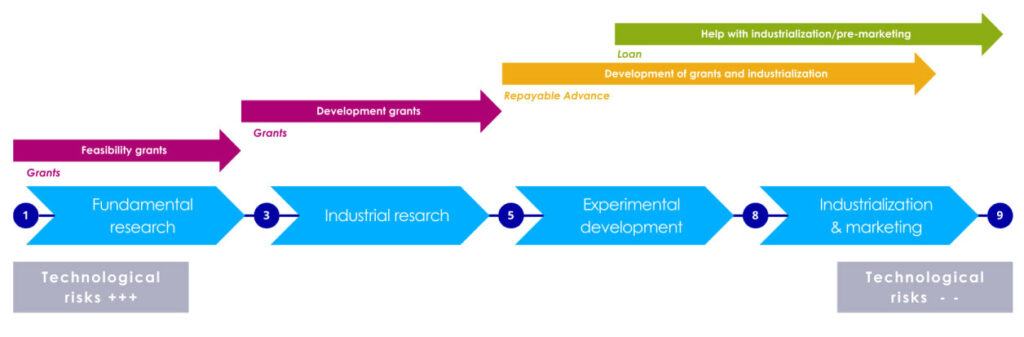
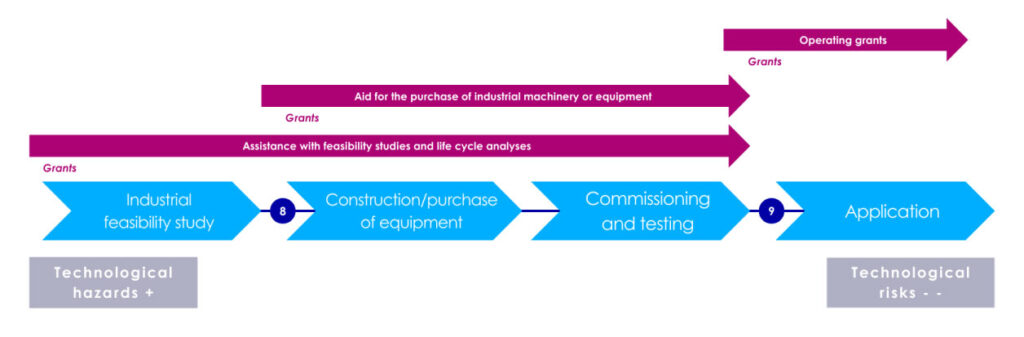
The TRL scale is also used to assess the eligibility of projects for tax credits, such as the Research Tax Credit (CIR) and Innovation Tax Credit (CII).
Projects in the early stages of development are eligible for CIR, while projects further up the TRL scale are eligible for CII.
Does your company develop technological projects? Do you want to know how much R&D expenditure you could claim? Discover the new FI R&D Tax Calculator and gain a clear understanding of your possibilities. Make the most of your R&D activities and claim the corresponding tax deductions!
Many countries are pursuing emission reduction policies as climate change has become one of the world’s principal challenges. Nations worldwide are facing macroeconomic and financial challenges that need to be tackled if governments want to achieve the ambitious targets for net zero by 2050. Decarbonising the global economy has become one of the main objectives governments around the world are striving to achieve.
What this calls for is a national awareness of the need to respect the environment and ensure that energy consumption is sustainable, and ideally decarbonised.
The scarcity and price volatility of fossil fuels are actually affecting the competitiveness of European industries and their ability to establish long-term strategies for growth. At the same time in this climate emergency, public authorities are recommending that industries focus on decarbonation by switching to low-carbon energy sources.
Companies play an important part in the achievement of the targeted objectives.
Decarbonation includes all measures taken to reduce the carbon footprint, i.e. the emissions of greenhouse gases, mainly carbon dioxide (CO2) and methane (CH4), and thus the impact on the climate.
More specifically, decarbonising your business means:
As a central theme of the COP26 discussions and driven by international cooperation, many countries around the world have pledged to reduce their carbon footprint.
The European Union (EU) is aiming for carbon neutrality by 2050. This means that the public authorities wish to strike a balance between carbon emissions linked to human activities and the absorption of carbon from the atmosphere enabled by carbon sinks such as forests.
Inevitably, the industrial world is urged to take action.
Meeting the ambitious targets for decarbonising the global economy by 2050 necessitates the development and implementation of a wide range of energy-efficient technologies.
To achieve this, most governments across the globe support the private sector and research and development (R&D) in the field of energy efficiency, with government policies aimed at boosting energy-efficient technologies. In the process, many countries rely heavily on spending measures such as increased public investment and subsidies for renewable energies.
Investments in the energy sector, and especially renewable energy, are vital to honour the Paris Climate Agreement adopted in 2015. For example, the International Energy Agency (IEA) estimates that cumulative investments of more than USD 6 trillion will be needed by 2040 if the agreement to keep the global average rise of surface temperatures below 2°C is to be met.
The positive impact of R&D spending in the energy sector has been demonstrated as it helps to reduce greenhouse gas emissions over the long term.
A vast legislative panel regulates decarbonation across the EU, made up of European directives and programmes such as the:
To incentivise the uptake of decarbonation measures, various European countries offer a wide range of funding opportunities encouraging industry players to accelerate their decarbonation.
According to the IEA, global annual investments in clean energy will need to more than triple by 2030, reaching approximately USD 4 trillion, if the net zero by 2050 objectives are to be achieved.
The sustainability of a business becomes a central issue in a context where decarbonation is essential.
A vital requirement in this respect is to control the energy mix by reducing the reliance on fossil fuels. Just as crucial is getting the material mix under control by adopting waste management and recycling practices. And there is a parallel need to control the energy performance by reducing consumption and emissions.
Finally, eco-design and circular economies are essential approaches to promoting a more sustainable use of resources and minimising the environmental impact.
By integrating these various measures, companies can contribute to the sustainability of their business while acting in an environmentally responsible manner.
Companies have a wide range of concrete projects they can implement to promote sustainability and reduce their environmental impact. Some of these projects include:
By implementing these projects, companies can make significant progress in achieving their sustainability goals, reducing their carbon footprint, and contributing to a greener and more sustainable future.
The implementation of strategic and complex projects calls for a thoughtful and well-planned approach. Especially as these projects can involve various areas such as building, production, and work routines. They often require significant investments in both the operational expenditure (OPEX) and capital expenditure (CAPEX). Projects on this scale also involve technical aspects, particularly concerning energy standards and requirements. It is essential to comply with current regulations and seek energy-efficient solutions.
Financing these projects can be complex, with a need to mobilise multiple funding sources such as European, national and regional subsidies, repayable advances, tax credits, and Energy Savings Certificates (EEC).
Implementing these projects moreover entails a complex value chain, with many players involved. It is meanwhile essential to keep a close eye on regulatory and strategic developments, establish an accurate inventory, formulate recommendations, make informed decisions, implement the necessary actions, manage the financial aspects, and continuously monitor the results achieved.
The success of these projects depends on a rigorous management and effective coordination of all the stakeholders involved. Reliance on solid expertise and close cooperation with the various stakeholders are essential to ensure the success and sustainability of these complex strategic projects.
Research and development plays a fundamental role in the advancement of science, technology and innovation. Organisation for Economic Cooperation and Development (OECD) countries recognize the importance of encouraging investment in R&D to boost economic growth and improve competitiveness.
In this sense, many countries have implemented a series of tax incentives to promote investment in R&D. These incentives seek to reduce the costs (and cover the risk) associated with research and development, encourage collaboration between companies and research centers, and stimulate the creation of highly qualified jobs in the private sector.
One of the most common incentives is the tax deduction for R&D activities. This scheme allows companies to deduct a percentage of R&D expenses from their tax base, which reduces the tax burden and increases the resources available for investment in research and development. Some countries offer additional deductions for the hiring of qualified personnel or for the acquisition of technological equipment.
Another incentive used in many OECD countries is the R&D tax credit. This mechanism allows companies to obtain a tax credit equivalent to a percentage of R&D expenses. Tax credit is a direct benefit that individuals can use to reduce the tax payable or even obtain a cash refund if the credit exceeds the tax owed, unlike tax deduction.
In addition to direct tax incentives, some OECD countries have implemented special regimes for research and development, which offer additional benefits, such as exemption from taxes on income derived from the exploitation of patents or reduction of taxes on profits from patents. capital obtained from the sale of assets related to R&D.
In many cases, R&D tax incentives are designed to encourage collaboration between companies and research centers. For example, some countries allow the transfer of R&D tax credits between companies, facilitating collaboration on joint research projects. Other incentives include the possibility of deducting R&D expenses carried out by third parties, such as universities or research centers, as long as effective collaboration is established.
It is important to highlight that tax incentives for R&D vary significantly between different countries. Each country has its own regulatory framework and establishes its own conditions and requirements to access tax benefits. Some countries offer more generous incentives, while others have stricter requirements. Therefore, it is essential that companies interested in taking advantage of these incentives consult the current legislation in each country and obtain appropriate advice.
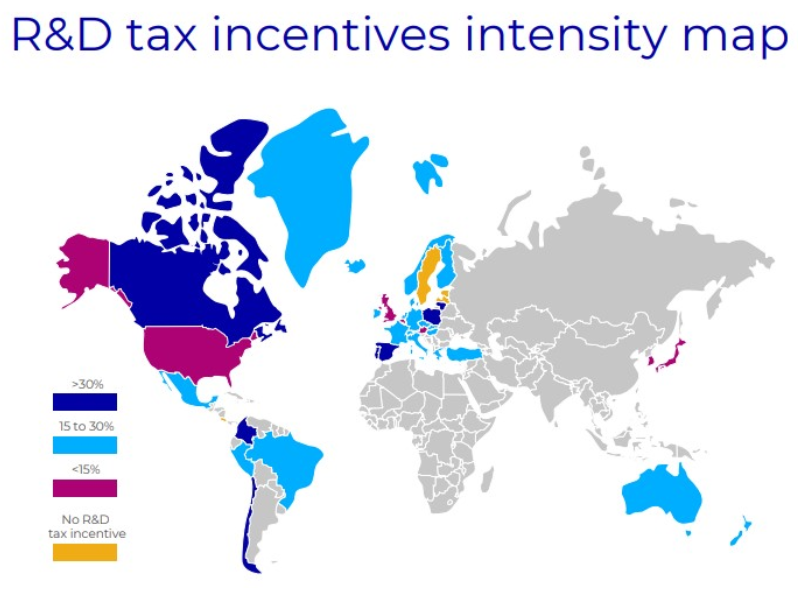
For this map to be representative of the different nature of R&D tax incentives (volume- based and incremental tax credits, super deduction), we took the scenario of a large company with R&D expenses during the last 10 years. Every year the amount of eligible R&D expenses is growing, as such, the claimant can apply for incremental R&D tax credits and deductions. The effective return on the R&D expenses is shown in the legend as a percentage of posttax reduction.
At FI Group we have extensive knowledge and experience in obtaining these tax incentives on different continents, with a global and coordinated strategy that is also complemented by the management and obtaining of public aid and subsidies for different types of investments. The combination of both incentives, from a strategic point of view and from a financial point of view, can mean for the company an important differentiation and competitive advantage within its scope of action.
FI Group has over 20 years of experience. Our specialized experts are at your disposal to analyze the fit of your project and advise you on obtaining tax incentives. Contact us.
The digital transformation is not just one thing or activity, but an entire process by which companies enhance the digital technology in their businesses, using it to change or create new processes, cultures, and customer experiences, optimising all the activities right from the start. The process can vary from one company to the next, depending on how the technology is applied and implemented.
Many ways lead to digital transformation and its changes, and every organisation’s journey will be unique. A company might add AI as a tool for optimising the customer experience or for developing new strategies to make its daily team routines more efficient. The organisation’s operations are rewired by the constant evolution and integration of technologies that improve its functions.
To be successful, the digital transformation calls for a variety of coordinated activities: it is a long-term effort with continuous adaptations and changes.
Even if the mention of digital transformation will automatically make you think of digitalisation, it is important to emphasise that the two are not the same. Digitalisation can be seen as an integral part of the digital transformation process and one of its ultimate pillars. But what is important even before this point is to first identify the requirements and possible improvements between teams and customers and their systems, and then set up a process for changing the culture and adapting routines to the new system installed.
Digitalisation is mostly about technologies – their application to change a business and automate business processes, step by step or rolled-out as a project – whereas the digital transformation is not, but can include digitalisation as an integral part in its continuing quest for new procedures while paying greater attention to people and their attitude to changes in the company culture.
In FI Group, too, the digital transformation is brought about in the most diverse ways, all aimed at providing added value for clients and employees. The digital transformation here proceeds incrementally in a stream-aligned structure – a model of organisation and team interaction where squads with digitalisation strategies for services in various areas globally develop and manage digital tools for teams and clients.
Applying new ways of systematising documents and data is meanwhile another operative element of the digital transformation – the establishment of new organisational methods facilitates and speeds up the work and access to required information.
More locally, we also have our Scientific Department, established by FI Group France in 2019, which leads the research relating to artificial intelligence and NPCs, aiming to enable a regular scientific and technological supervision for proposing new approaches and supporting R&D Financing Consultants in their daily missions.
2023 will go down as the breakthrough year for ChatGPT due to the intuitive capabilities and wide scope of applications of the tool.
But where did it all start?
Created in 2015, OpenAI has notable founders such as Elon Musk and Sam Altman with the aim of integrating artificial intelligence into society for the benefit of humanity. Looking back on the last seven months, you can definitely say their work has impacted society through their creation of ChatGPT.
In a nutshell, ChatGPT is an AI application that has been ‘trained’ to understand natural language and conversation. Pulling data from the internet and presenting its findings in easy to understand responses. Furthermore, it can be used as a translator, create content, summarise text and process / write code.
Ironically, you can find out about the R&D behind ChatGPT by simply asking it. The tool identifies five components that make up its development:
However, it can be difficult to put all this development into perspective and understand the gravity of its intelligence. The English language is comprised of one million words. In comparison, ChatGPT is made up of ten billion words, including fifteen languages (incl. English, French, Russian, Chinese, Arabic and Urdu), and sixteen programming languages (incl. Python, Java, JavaScript, C++ and, HTML/CSS).
If you wanted to dive deeper into the development of the tool, tokenization is the breaking down of the sequence of text into smaller units, appropriately called tokens. These help ChatGPT’s natural language processing (NLP) for further development.
As previously mentioned, OpenAI reached their goal of impacting society through their work. The applications for ChatGPT are vast, content creation, consultancy, and customer support to name a few.
A popular term being used more and more within industries is, ‘ChatGPT won’t take people’s jobs, people that use it will’. Which to an extent is correct. If utilised correctly by competent professionals with in-depth knowledge of their profession, then ChatGPT can allow for streamlined workflows and increased productivity.
Despite having ten billion words, mistakes can still be made. Users who copy and paste its responses risk not only incorporating the errors the tool might have created but also limiting themselves by hindering personal development in their respective careers.
FI Group has made the decision to move away from ChatGPT. At a glance this decision might undermine what was said previously about streamlining workflows, however, we have opted to use a different tool. We are launching MarIA which uses AzureGPT functions. Similar to ChatGPT, but can ensure that conversations and data shared with it remain in the Azure environment which provides an additional level of security.
On the topic of ChatGPT, FI Group France Scientific Director Charlie Grosman said:
‘while it generates useful and relevant information, in a short period of time, it is not a technology that employees should trust at an exact level».
What does MarIA mean for our clients?
FI Group requires a lot of sensitive information from our clients such as confidential R&D project details and employee salary, if this information is shared with ChatGPT it is then stored in OpenAI’s database and outside of our control. MarIA ensures that any private information is kept safe in our own database and cannot be accessed by anyone outside of FI Group.
Moreover, MarIA will also limit how much FI Group employees can use its functions. Ensuring that work is being done by real people and aided by the tool, when necessary, rather than the other way round. Meaning, clients can be assured they are getting genuine expert client opinions.
Given the great volumes of data and information to be handled these days, companies need to implement security measures and processes to guarantee data protection and privacy.
In the IT world, companies are becoming increasingly vulnerable to possible cyberattacks. It is therefore crucial for all organizations to have information security systems enabling them to analyse and detect possible anomalies that could indicate a potential threat to their servers.
Which is why we at the FI Group have an information security management system (ISMS) to guarantee the confidentiality and protection of internal information and our clients’ data. And in this respect, we have also been awarded the ISO 27001 certification again.
This certification demonstrates our commitment to providing high-quality products/services while adhering to strict international standards. We’re proud to have achieved its renewal, which recognizes the quality and strength of the FI Group’s ISMS.
Information security management systems are made up of policies, organizational structures, procedures, processes and resources necessary to guarantee the confidentiality, integrity and availability of information in an organization.
For some years now, leading international standardization bodies have been establishing requirements for the implementation of information security management systems. One of the most frequently used among them is the 27001:2017 standard by the International Organization for Standardization (ISO) because it is widely recognized internationally and permits implemented information security management systems to be certified.
We have implemented security measures and processes in several FI Group countries to ensure that all our systems are safe, and to demonstrate our commitment to customers. The countries already certified are:
– Belgium
– Brazil
– Canada
– Chile
– Colombia
– France
– Portugal
– Spain
– USA
– United Kingdom
– Germany
– Italy
Spain additionally has an ISO 27701certificate demonstrating an even higher level of privacy and data protection.
The renewal process has two major parts and takes a whole year.
The first part is an internal audit where all the ISO domains are evaluated, and we can verify the strength of the controls implemented in the company.
Once the internal audit has been completed, we focus on the aspects identified as potential improvement areas while working on the continuous development of our information security management system.
This process takes a whole year because it needs to continuously update and develop the implemented controls while adding new checks and processes that help to strengthen our company.
The second major part in October is the external audit where the company’s compliance with the controls and domains required by ISO 27001 is evaluated.
Once this audit is done, the country in question will either be certified again, unless of course it has failed to pass it.
We can see an improvement in our company’s processes and safer procedures that allow us to work with our own and customer information while maintaining the highest security standards.
The difference after implementing the certification is most tangible in our company’s day-to-day business and the confidence that we are working with truly private and confidential data.
Innovation and technological development lie at the core of FI Group’s DNA, filtering down through every member of the group. These elements are deemed indispensable for fostering growth and bolstering the competitiveness of any country.
This stemmed from the aftermath of the Covid-19 pandemic. Where both national and international policies strategically pivoted towards promoting investment in R&D&I and energy efficiency to reignite various sector’s work after the pandemic.
Regional, national, and European grants emerged as the primary public tools to drive economic revitalisation and foster growth across continents. Adequate public funding plays a pivotal role in facilitating the execution of large-scale R&D projects, which are critical for addressing the challenges posed by the prevailing political and economic landscape. These grants not only present opportunities for entities to confront these challenges but also serve as catalysts, inspiring innovation, differentiation, and investment to ensure development.
Currently, the continent boasts over 100,000 funding opportunities, encompassing regional, national, and European grants. Recognising the significance of these public funding opportunities, we have assembled a panel of experts from different countries to engage in a comprehensive discussion on the subject.
Among those attending this round table were:

1. First question: How many calls are there in each of your countries?
«Just imagine, according to the Spanish national database, in 2022 there were 62,817 calls for proposals,» –AV.
«At the regional level alone in this 2023, 459 calls have already been opened» –NZ.
«And we are only in May, we still have more than half the year ahead of us»- FAC to which Roberta explains that in Italy right now there are more than 650 published and waiting for the publication of another 97.
2. What do the calls for proposals mean for the different companies?
«I think we all agree that these calls for proposals, at all levels and for all types of companies, mean the possibility of making an investment or starting a project that would otherwise be difficult to carry out,» –VO.
«I totally agree. In addition to the fact that it makes it possible to grow the business and expand into new markets, and even to become known as a key player in the different sectors, especially in R&D calls,» –RD
«We cannot forget that it has an incentive effect, and that it also makes it possible to achieve results in a shorter period of time than would be possible without these calls». – AV
3. What role does FI Group play in the achievement of these objectives? How can we accompany the different companies in these processes of application to the different calls?
«At the level of the processes of fitting into the calls, application, monitoring and justification; for a company it is a tremendously bureaucratic and complex process. Being able to count on a trusted partner with years of experience is essential,» –AV *while her colleagues nod in agreement.
«With the support of a specialised agent or one that is close to the convening agency is a «privilege» that few actors have in this ecosystem. FI Group has a long experience and great success in all the stages that my colleague explained earlier,» -FAC
«We have teams of experts in both technical and financial areas, without forgetting that we are part of the ecosystem and know all the parties involved, being active and proactive in creating value propositions to improve the systems and funds so that they are more attractive and competitive,» –MO
«We also help to involve one or more stakeholders in relation to the sector or area, and we help and accompany them to improve collaboration. This is precisely due to a large global database of contacts that we have been working on during the 20 years of FI Group’s existence, which allows us to support our clients in an aggregated way, both at multi-country, multi-sector and multi-service levels».-RD
«Absolutely. To a great extent to the experience acquired, the knowledge, the connection networks, we have the capacity to offer this multi-country, multi-sector and multi-service service, but we also continue to do it as the first day, with an individual team per client, with an exclusive and close accompaniment, always making their project ours» –NZ
4. What are the most strategic sectors right now?
«I think we all agree that currently the most strategic sectors, not only for FI Group but for the whole of Europe and therefore for our clients, are industry in general and specifically all the electro-intensive ones, as well as everything related to energy, decarbonisation and hydrogen,» –NZ
«Automotive, ICT, Tourism, biotechnology, textile, chemical…». – MO
«From FI Group we continue and will continue to accompany all companies in achieving their objectives and their R&D&i projects, solving their doubts, finding the best fit in consortia or accompanying them in the justifications of the calls they have already achieved. This is and will be the driving force of all the colleagues who are part of this company». –VO
Hit the links below to access their LinkedIn profiles:
Articifial Intelligence is a technology that belongs to the field of computer science and aims to create systems and algorithms that run in a dynamic environment, based on the collection and processing of data. These computer programs must be able to simulate human intelligence. The main objective of AI is to create intelligent machines that can help solve complex problems in many fields.
There are several categories of Articifial Intelligence (AI), which can be classified according to their capability and level of sophistication. Here are some of the most common categories of Artificial Intelligence :
To get as close as possible to human behaviour, Articifial Intelligence needs a lot of data, as well as a processing and learning capacity. To achieve this, three components are needed:
To enable computers to learn from data, Articifial Intelligence relies on Machine Learning models (a method that aims to teach machines to learn from data and improve with experience). There are 3 learning methods used:
It is important to note that AI is a constantly evolving field of research, and that definitions and distinctions between different types of Artificial Intelligence may change.
The main goal of AI is to create intelligent machines that can help solve complex problems in many fields, such as medicine, engineering, finance, security, social sciences, gaming, etc. Articifial Intelligence is seen as a key technology for the future and has the potential to transform the way we live and work.
These examples are just a small portion of the application areas for AI, and new uses are regularly discovered as the technology continues to advance. AI can therefore be used to improve efficiency, accuracy, safety, and quality in many different areas.
One of the most popular supervised AI at the moment is Chat GPT (Chat Generative Pre-trained Transformer). This conversational tool aims to help its users solve problems, answer questions, and provide information in various domains. It therefore generates text from input data (questions, queries, etc.). It is based on Natural Language Processing technology (NLP) and uses unsupervised learning. It has been trained on a very large corpus of text to learn how to generate consistent and relevant answers based on user queries. This is possible because it has access to huge amounts of text, from various sources.
As a pure player in the R&D ecosystem, FI Group France has created a Scientific Department back in 2019. They lead research in Artificial Intelligence and NLP mostly. This department is composed of seven Researchers (including two Industrial PhD CIFRE). One PhD student is conducting a thesis on data extraction and the construction of algorithms to evolve their grouping by theme and subject. The second PhD student is doing a thesis on unsupervised learning on data flows. She is developing methods capable of clustering data continuously.
The objective of this department is to allow the realization of a regular scientific and technological watch to propose new approaches, and thus to support R&D Financing Consultants in their daily missions.
These projects are possible thanks to the development and experimentation of techniques in Machine Learning and Automatic Language Processing. These processes facilitate the search for information in a large volume of data. A third research topic concerns the acquisition of new knowledge and the involvement of collaborators, via Gamification processes and serious games.
One of the projects supported by FI Group is called NASA. This AI makes it possible to search for scientific articles based on various concepts.
For each query, the articles published between 2019 and 2021 (about 13 million) are used to represent this knowledge in the form of a graph of concepts. It is then possible to display 10 scientific articles published for each concept.
The first prototype of NASA «First STEP» (Scientific Taxonomy Exploration Prototype) was launched in March 2022. The second and the third were respectively put online in September 2022 and February 2023. This «Third STEP» proposes improvements in performance, quality and user experience.
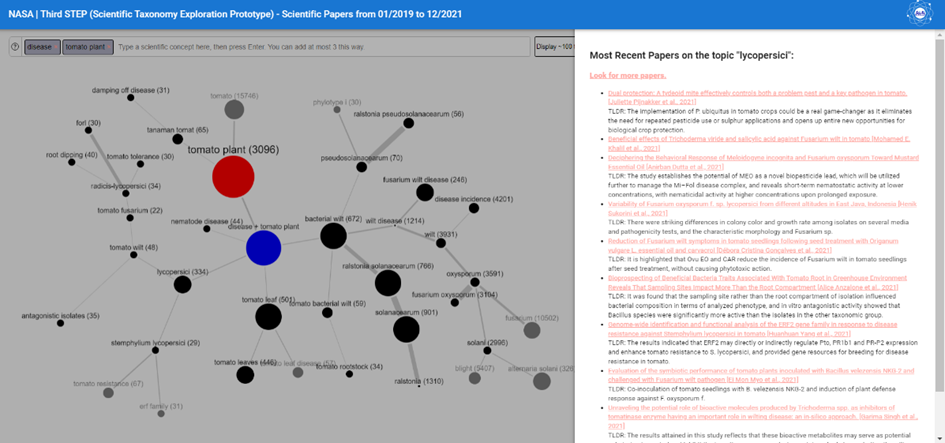
Case studies have argued that 50% of employees could be replaced by machines because of the big technological advancements in AI in the era of Digital Transformation, however, we see this as a complement instead as a negative human replacement.
We see computer software’s and AI as an addition to our activities, working alongside people who are part of the chain of vision. People can improvise, be reactive and think critically, showcasing the advantage of people in unexpected situations. There is a clear link between the collaborative work that can be done by AI and people, rather than a separation.
Knowing how to be an efficient and productive team is always the main aim of any successful partnership. As discussed, both people and AI have different strengths and weaknesses. By delegating tasks based on these strengths and weaknesses the digital transformation and partnership between people and AI can become more efficient and impactful.
It is becoming harder and harder to talk about Consultancy without mentioning digitisation. The digitisation of consultant tasks can be eased by Robotic Process Automation (RPA) software’s. These systems are designed to emulate human’s actions when interacting with digital systems, such as recognising and extracting relevant data.
This automation undoubtedly contributes to the streamlining of the consulting process. It can gather information immediately, transfer documents instantly, create news queries in a few minutes, solve the incidences quickly and in the stages of verifying or making changes to procedures.
So, the digital transformation allows for flexibility within automation systems, which develops ease and efficiently, making the consultants project writing time shorter. This is also a benefit for the client as it allows for quicker turn around time on R&D reports.
Focusing on the improvement of the value add of our services has always been one of our greatest priorities. Innovation and technology are core pillars of our business, we are always looking for ways to improve our internal procedures through digital advancements that are being made, to provide the best and most efficient results for our clients.
We offer a free audit to highlight and show our clients areas in their R&D process that can be improved by our team and service.
To improve this process, we have created an application that have improved the line of communication between FI Group and clients, and allows 24h access to updated claim information, improving our traditional services through new digital tools.
Introducing FI Connect. A new digital space that integrates several applications on a single platform. Benefiting our customers by providing greater transparency and showcasing the digital transformation that FI Group is currently undergoing and that will drive productivity for clients and consultants alike.
Find out if the service is available in your country to book a demo:
The pandemic has led to a global economic and social crisis, and the European Union and Member States have had to adopt emergency measures. Among these, the creation of an exceptional temporary recovery instrument, the NextGenerationEU, has been agreed.
FI Group is an active player in multiple European countries that will benefits from NextGenerationEU. These countries include:
FI Group has already developed a dedicated up and running Next Generation team in each of the countries listed. These teams are qualified to handle any questions or requirements your company might have regarding NextGenerationEU.
This recovery instrument is supported by 750 billion euros, part of which will be provided in the form of repayable loans (360 billion euros) and part of which will be provided in the form of non-repayable transfers (390 billion euros).
The EUR 750 billion will be distributed through different tools:
At FI Group we are supporting the entire value chain (startups, SMEs, large companies, knowledge centres, etc.) in areas such as:
If you want to find out more about how your company could benefit, get in contact with our team today!